
How Professional Associations Choose Event Management Software
Association annual meetings need member pricing, CE tracking, and board reporting most event software skips. Here's what to evaluate before you switch.
October 13, 2026
Association event management software has to do something most general-purpose event platforms were never built for: treat a member and a non-member as different customers, track continuing education credit at the session level, and hand a board a clean revenue picture without a staffer rebuilding a spreadsheet from four separate exports. A professional or specialty society's annual meeting usually is the largest revenue and engagement moment on the calendar, run by a small staff that also manages membership and chapters the other eleven months of the year, and that context changes what "good" software actually looks like.

Why Generic Event Software Falls Short for Associations
Most event platforms are built to answer one question well: how do you sell tickets and check people in efficiently. That is a real problem worth solving, but it is not the whole problem an association faces. A platform that treats every registrant identically has no concept of member versus non-member pricing beyond a manually maintained discount code, which goes stale the moment your membership roster changes and someone forgets to update it before registration opens. A platform without continuing education tracking treats a CE-accredited session exactly like any other session, leaving staff to reconcile paper sign-in sheets against a spreadsheet after the show to prove who actually attended what. A platform with no exhibitor or sponsor tooling forces staff to run a second system alongside the first if the annual meeting includes even a modest trade show component.
None of these gaps are visible when you first sign up. They surface in week two of planning, when someone on staff realizes the "easy" registration platform is going to require weeks of manual workarounds to do what the association actually needs. By the time the annual meeting itself arrives, that gap has usually turned into a set of manual processes nobody planned for: a spreadsheet tracking which discount codes went to which member segment, a printed sign-in sheet taped to the door of every accredited session, and a separate login for whichever exhibitor management tool got bolted on because the registration platform never offered one.
The staff cost of these workarounds rarely shows up in the software's sticker price, which is exactly why it is easy to underestimate during the initial evaluation. It shows up afterward, in the hours spent reconciling data that never should have needed reconciling in the first place.
Member-Aware Registration and Pricing
The single most common headache for association staff running registration by hand is applying member pricing correctly and keeping that logic current. A platform genuinely built for associations checks a registrant against your existing membership database directly, rather than relying on a manually distributed promo code that a member has to remember, a non-member could guess, and staff have to update every time your membership roster changes.
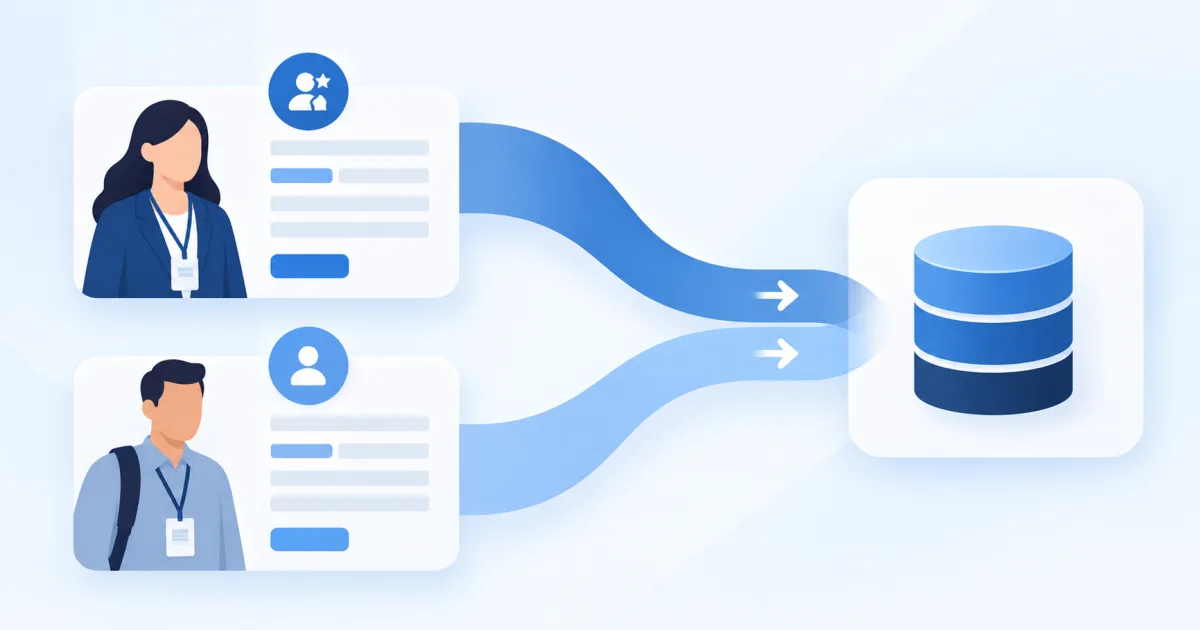
This matters more than it sounds like it should, because membership rosters are not static. New members join between renewal cycles. Members lapse. Chapter-level membership sometimes differs from national membership in ways that affect pricing eligibility. A registration system that can check membership status in real time against your actual database, rather than a snapshot exported weeks earlier, avoids the awkward conversation of telling a member they were charged the wrong rate because the discount code list was out of date.
Beyond member versus non-member pricing, many associations run additional tiers: early-career rates, retired-member rates, student rates, first-time-attendee incentives. A platform that can layer these rules without custom development for each one saves real staff time every single registration cycle, not just once.
Continuing Education Tracking and Compliance
If any part of your program carries continuing education credit, whether CE, CME, CLE, or an industry-specific equivalent, the software needs to track attendance at the session level, not just confirm that someone registered for the event overall. A general-purpose platform without this built in typically means a paper sign-in sheet at the door of each accredited session, followed by a manual reconciliation process where staff cross-reference sign-in sheets against the registration list, calculate hours earned, and generate documentation attendees need for their own licensing or certification bodies.

This process scales badly. It is merely tedious at 200 attendees and genuinely error-prone at 2,000, particularly when an attendee moves between concurrent sessions and the paper trail has to capture exactly which ones they were present for and for how long. Software that captures session-level attendance electronically, through badge scanning at each session's entrance rather than a clipboard, turns a multi-day manual reconciliation project into something that generates automatically as the event happens.
Documentation matters as much as tracking. Attendees who need proof of CE hours for their own professional licensing should be able to receive a certificate or transcript without staff manually compiling it after the fact. This is one of the more concrete ways association-specific software pays for itself versus a generic platform: it replaces a task that used to consume days of staff time after every annual meeting with something that is largely finished by the time the closing keynote ends.
Exhibitor and Sponsor Management
Many association annual meetings run a trade show or exhibit hall alongside the education program, sized to the association's industry (a manufacturing trade association's exhibit hall looks different from a medical specialty society's, but the underlying need is similar). The question worth asking is whether the platform handles both the education side and the exhibitor side in one system, or whether staff have to run a separate exhibitor management tool and manually keep exhibitor data in sync with the registration system.
Running two systems means duplicate data entry, a higher chance of exhibitor information getting out of sync between the two, and staff spending time reconciling rather than executing. A combined system means an exhibitor's booth assignment, badge allotment, and any lead retrieval access they purchase all live alongside the attendee registration data, without a second login or a second export-import cycle for staff to manage.
If your exhibit hall is a meaningful part of the annual meeting's budget, whether through booth fees, sponsorship packages, or exhibitor lead retrieval revenue, the operational cost of running it through a disconnected system compounds every year you stay on the wrong platform.
Board and Leadership Reporting
Associations answer to a board, and a board wants a clean answer to how the annual meeting performed: revenue against budget, registration numbers against prior years, attendance by member category, and exhibit hall performance if applicable. Pulling that picture together manually, from separate registration, payment, and exhibitor exports, is a task that eats staff time in exactly the week after the event when staff most need a break.

Software that generates this reporting natively, without staff assembling it by hand, matters more for associations than for one-off event producers, because the same leadership group is going to ask largely the same questions again next year, and the year after. A reporting workflow you have to manually rebuild every cycle is a cost that never goes away. A reporting workflow the platform generates on its own is a cost you pay once, when you choose the right software, rather than every single year afterward.
Sponsorship and Non-Dues Revenue Tracking
For many associations, the annual meeting is also the largest single source of non-dues revenue for the year, through exhibit hall fees, sponsorship packages, and add-ons like lead retrieval access. Tracking this revenue accurately, and being able to report on it separately from membership dues and registration fees, matters both for the board conversation and for planning next year's sponsorship prospectus.
A platform that treats sponsorship as a manually tracked side arrangement, invoiced and recorded outside the main system, makes it harder to answer a simple question a board is very likely to ask: how much of this year's total revenue came from sponsors and exhibitors versus attendee registration fees. Software that tracks sponsorship packages, tiered benefits, and add-on purchases like lead retrieval as part of the same system generating attendee and exhibitor data gives staff a single source of truth for that answer, rather than a reconciliation project between an invoicing tool and the registration platform.
Year-Round Thinking Versus Single-Event Thinking
A meaningful, easy-to-miss difference between platforms is whether the software assumes this is the only event you will ever run, or whether it is built around the reality that an association runs an annual meeting, is likely already thinking about next year's before this year's has even closed, and may run smaller regional or chapter events in between.
Re-entering your program structure, your member pricing logic, and your exhibitor list from scratch every single cycle because the platform has no concept of a recurring, evolving relationship with the same organization is a cost that compounds every year you stay on it. A platform built around the association's ongoing relationship with the software, rather than around a single isolated event, lets staff carry forward structure from one year to the next and spend their planning time on what actually changes, not on rebuilding what does not.
Free Download
Conference Management Software Buyer's Guide 2026
Features, pricing models, and a vendor comparison matrix. Free, no strings attached.
What Switching Actually Involves
The requirements above are usually easy for association staff to agree with. The harder question is what it actually takes to move off a platform you have already been running on, especially when that platform holds years of member registration history, CE attendance records, and exhibitor relationships.
Timing matters more than most associations plan for. The safest window to switch is between annual meetings, once this year's event is fully closed out and reported on, and well before next year's registration would normally open. Switching mid-cycle, while a current registration period is active or CE documentation from the most recent meeting is still being requested, multiplies the risk of something falling through the cracks during the transition itself.
Historical data needs a real plan, not an afterthought. Attendees sometimes need CE documentation from a meeting two or three years back for a licensing renewal, and staff need to be able to answer a board's question about attendance trends over time. Before committing to a new platform, ask specifically how historical registration and CE records import, or whether they need to be kept accessible in the old system indefinitely because migration isn't realistically possible. An association that assumes old data will "just be there" after a switch, without confirming it with the new vendor in writing, is the association that discovers the gap the first time someone actually needs a five-year-old CE transcript.
Member data import is usually the biggest lift. Moving an existing membership database into a new platform's pricing-tier logic, so member and non-member rates apply correctly from the very first registration on the new system, takes real coordination between association staff and the vendor's onboarding team. Ask how that import process actually works, what format the association's existing member list needs to be in, and how corrections get handled if the first import doesn't match perfectly.
Staff training has a real cost, even for intuitive software. A platform can be genuinely easier to use than what it replaces and still require staff time to learn before the first live registration cycle on it. Planning the switch with enough runway for staff to get comfortable with the new system, rather than learning it live during the next annual meeting's registration crunch, is worth building into the timeline from the start.
Common Mistakes Associations Make When Choosing Event Software
The most frequent mistake is selecting a platform based on the registration and ticketing experience alone, since that is the part every vendor demos well, without asking how member pricing, CE tracking, or exhibitor management actually work in practice. A registration flow can look polished in a fifteen-minute sales call while the CE compliance workflow underneath it is a bolted-on afterthought that only becomes visible once staff try to generate certificates for the first time.
A second common mistake is underestimating how much staff time member pricing maintenance actually consumes on a generic platform. A promo-code-based system sounds simple in a sales conversation, but the ongoing cost of keeping that code list synchronized with an actual, changing membership roster rarely gets factored into the decision until staff are living with it every renewal cycle.
A third mistake is choosing software based on this year's event size without asking whether it can grow with the association. An annual meeting that runs 400 attendees today may run 1,200 in five years if the association is growing, and a platform that handles the smaller number comfortably may show real strain, both in performance and in the staff workflow required to run it, at the larger one.
A fourth mistake, less obvious but common among smaller associations, is choosing the cheapest available platform without factoring in the value of staff time saved. A modestly more expensive platform that eliminates a week of manual CE reconciliation and a week of manual board-report assembly after every annual meeting is very often the cheaper option once staff time is counted as a real cost, not a free resource.
A fifth mistake is signing a contract without confirming the switching timeline against the association's actual calendar. Associations that commit to a new platform without checking whether onboarding and data migration can realistically finish before the next registration cycle opens sometimes end up running their first year on the new system under exactly the kind of time pressure the switch was supposed to eliminate, or reverting to manual workarounds on the new platform because there wasn't time to configure it properly before go-live.
Questions to Ask Vendors Before You Sign
A short list of direct questions tends to surface the gaps a demo will not: Can the platform check registrant status against our actual membership database in real time, or does it rely on manually maintained discount codes? How is continuing education attendance captured at the session level, and what does the certificate generation process actually look like for staff and for attendees? If our annual meeting includes an exhibit hall, does exhibitor management live in the same system as registration, or would we be running two platforms side by side? What does board-level reporting look like out of the box, and how much of it requires custom export work? And finally, what does the platform look like for a recurring, multi-year relationship, not just for a single event: does structure and configuration carry forward from year to year, or does staff start over each cycle?
Vendors who answer these questions specifically, with a demo of the actual workflow rather than a general description, are worth taking seriously. Vendors who redirect to a features list without addressing the specific workflow are signaling that the gap you are asking about probably exists.
Supporting Chapter and Regional Events
Many associations run more than one event a year. A national annual meeting is usually the largest, but state or regional chapters often run their own smaller conferences, workshops, or continuing education sessions under the same association brand. A platform chosen only around the national meeting's needs can create a second problem: chapters either get locked out of the tools headquarters uses, or they adopt a separate, ungoverned set of tools because the main platform is too complex or too centrally controlled for a volunteer-run chapter to manage on its own.
Software that supports both scales well tends to offer a lighter-weight event creation path chapters can use independently, while still rolling attendee and revenue data up into a picture headquarters can see. This matters for member experience as much as for staff efficiency. A member who registers for a chapter event and later registers for the national meeting benefits from the association recognizing them as the same person across both, rather than treating each event as an entirely disconnected system with its own separate registration record.
Associations evaluating software for the national meeting alone sometimes miss this until a regional director asks why their chapter cannot use the same tool the national office just adopted. Asking about multi-event and multi-organizer support during the initial evaluation, even if chapter rollout is not planned for year one, avoids having to solve this problem twice.
What This Looks Like in Practice
Consider a mid-size professional society running an annual meeting for 1,500 attendees with a modest exhibit hall of 60 booths. On a generic event platform, staff maintain a separate discount code spreadsheet for member pricing, print paper sign-in sheets for eight CE-accredited sessions and spend the week after the event reconciling them by hand, run the exhibit hall through a separate spreadsheet because the registration platform has no exhibitor tooling, and spend another several days after the event pulling numbers from three different exports to build the board report.
On a platform built around association requirements, member pricing applies automatically at registration because it checks the association's own membership database, CE attendance is captured electronically at each accredited session and certificates generate without manual work, the exhibit hall runs through the same system as registration so exhibitor and attendee data never fall out of sync, and the board report is largely ready the day after the event closes rather than a week later. The difference is not a handful of nice-to-have features. It is the difference between staff spending the week after the annual meeting on reconciliation work versus spending it on next year's planning.
Running Association Conferences with VenueSight
VenueSight's association conferences solution is built around these specific requirements: member and non-member registration pricing tiers configured directly in the platform, session-level continuing education tracking with attendee documentation generated automatically, combined exhibitor and sponsor management alongside registration in one system, and real-time dashboards and reporting for association leadership without manual spreadsheet assembly after the event closes.
If your association's conference also serves an academic, research, or medical-specialty audience with abstract submission and peer review needs on top of the education program, our guide to academic conference management software covers that adjacent set of requirements, and our medical conferences solution goes deeper on CME-specific compliance. To see the association-specific features described here in a live walkthrough, book a demo with our team.
Frequently Asked Questions
-
Associations typically need member-aware pricing tiers, continuing education credit tracking at the session level, and reporting on revenue and attendance for leadership, requirements most general-purpose event platforms do not build in natively.
-
If any part of the program carries CE, CME, or CLE credit, the software should track attendance at the session level and generate documentation attendees can use afterward. Without this, staff typically end up reconciling paper sign-in sheets by hand after the event.
-
Platforms built for associations can configure member and non-member pricing tiers directly in the registration flow and apply them automatically, rather than requiring staff to maintain and distribute manual discount codes that go stale as the membership roster changes.
-
Running the exhibit hall on a separate system from registration typically means duplicate data entry and a higher chance of exhibitor information falling out of sync. A combined platform keeps booth assignments, badge allotments, and lead retrieval access alongside attendee registration data in one system.
-
VenueSight's association conferences solution combines member and non-member registration pricing tiers, session-level continuing education tracking with automatic attendee documentation, exhibitor and sponsor management, and real-time reporting for leadership in one platform, instead of the separate spreadsheets and manual reconciliation a general-purpose event platform typically requires.