
Exhibitor Lead Retrieval ROI: How to Measure and Improve It
Most exhibitors don't calculate lead retrieval ROI. This guide covers the formula, why lead quality matters, and positioning it as a profit center.
August 1, 2026
An exhibitor pays $5,000 for a booth at your trade show. They collect 200 leads during the three-day event. But they rarely calculate what those leads are actually worth. Did they close 10 deals at $2,000 each = $20,000 revenue? Did they spend 20 hours following up? Was the return $4 per lead or $40 per lead? Most exhibitors don't know. For organizers, this is a missed opportunity. If your exhibitors don't understand the ROI of lead retrieval, they don't value it, don't budget for it, and don't re-exhibit next year. This guide covers how to teach exhibitors to measure lead retrieval ROI, how to help them actually achieve it, and how to position lead retrieval as a profit center that improves both their results and your revenue.
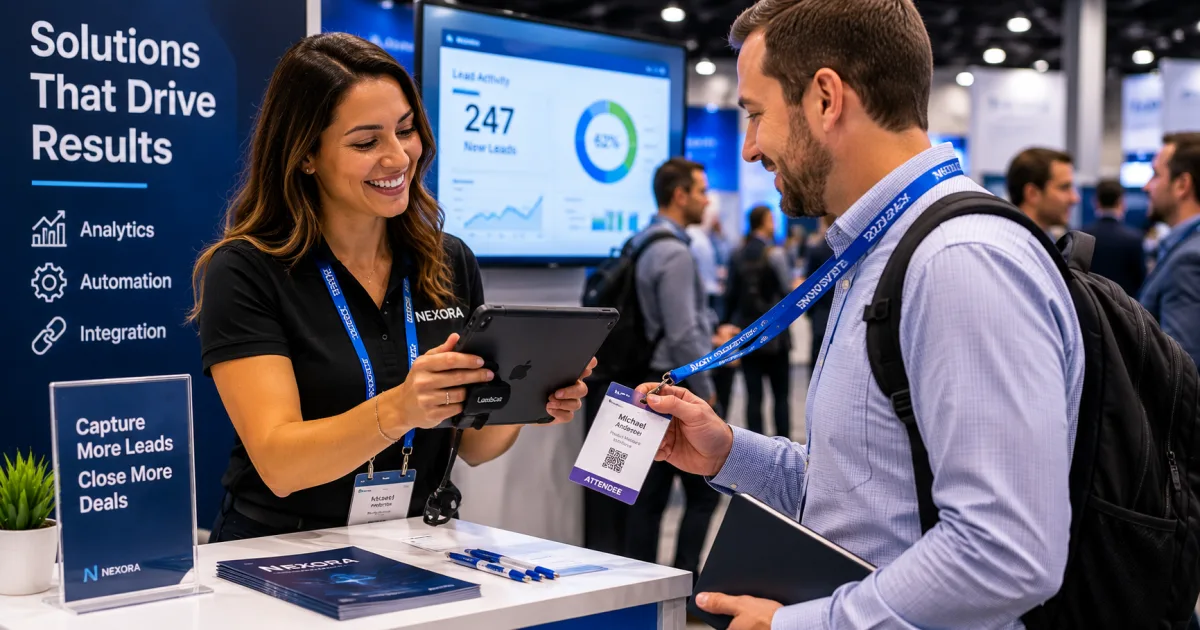
What Is Exhibitor Lead Retrieval ROI
Lead retrieval ROI is the return an exhibitor receives from capturing and following up with leads at your event, measured against the cost of their booth and lead retrieval tools.
Simple formula:
Lead Retrieval ROI = (Revenue from Leads - Total Show Cost) / Total Show Cost × 100%
Example:
- Exhibitor booth: $5,000
- Lead retrieval tools: $200
- Total cost: $5,200
- Leads captured: 200
- Average deal value: $150 per lead
- Deals closed (within 6 months): 30
- Revenue: 30 × $150 = $4,500
- Net: $4,500 - $5,200 = -$700
- ROI: -13%
This exhibitor actually lost money. This is more common than most organizers realize.
Contrast this with a better outcome:
- Same booth: $5,000
- Same lead retrieval: $200
- Leads captured: 150 (fewer, but higher quality)
- Average deal value: $500 per lead (targeted audience, better qualification)
- Deals closed: 40 (because they're higher-intent leads)
- Revenue: 40 × $500 = $20,000
- Net: $20,000 - $5,200 = $14,800
- ROI: 285%
The second exhibitor crushed it. The difference isn't the number of leads. It's the quality of the leads and how the exhibitor followed up.
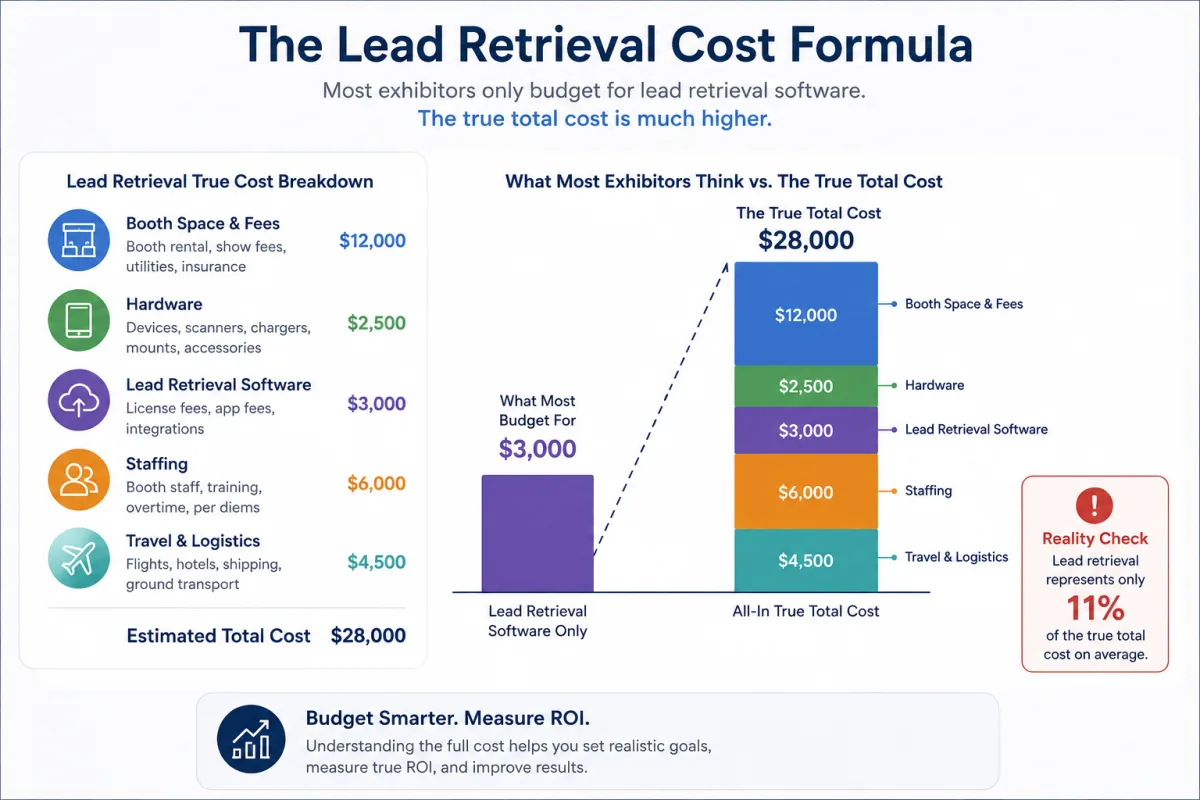
The Lead Retrieval Cost Formula
An exhibitor's total cost for lead retrieval includes more than just the booth:
Direct Costs
- Booth space: $5,000–$25,000 depending on booth size and show tier
- Lead retrieval hardware: $100–$500 (iPad, barcode scanner, or badge-tap device)
- Lead retrieval software: $200–$500 (if they're using a specialized app beyond your built-in system)
- Booth staffing: often not calculated, but significant. Two reps for three days = 48 hours. At $50/hour loaded cost (salary + benefits), that's $2,400 just in labor.
- Travel and materials: flights, hotels, printed collateral, shipping booth materials. Budget $2,000–$5,000.
Total typical cost: $10,000–$35,000
Most exhibitors only calculate the booth fee ($5,000) and ignore the rest. That's a mistake. If they spent $20,000 total and closed $22,000 in revenue, they hit only a 10% ROI. If they had understood the true cost upfront, they might have qualified leads more aggressively or committed better staffing.
Understanding the full cost of lead retrieval is essential for setting realistic ROI targets. For a detailed breakdown of how organizers calculate costs versus what exhibitors actually achieve, see our guide on measuring trade show ROI.
Soft Costs (Often Overlooked)
- Time to follow up on leads: Each lead typically requires 3–5 follow-up touches (email, phone call, meeting). For 200 leads at 15 minutes per lead, that's 50 hours of follow-up. At $50/hour, $2,500.
- CRM setup and data entry: Getting leads into their system, de-duping, assigning to sales reps. Budget 2–3 hours, $200–$400.
- Sales collateral and samples: printed materials, product samples sent to interested leads. $500–$2,000.
Total true cost: $12,500–$40,000
This is what exhibitors should calculate before deciding to exhibit.
The Revenue Side: Calculating Deal Value
Not all leads convert to deals, and not all deals close immediately. Here's how to think about it:
Average Deal Value
The average revenue per closed deal for an exhibitor. This varies wildly by industry.
B2B SaaS: $5,000–$50,000 per deal
Manufacturing/industrial: $50,000–$500,000+ per deal
Professional services: $10,000–$100,000 per deal
Staffing/recruiting: $2,000–$10,000 per placement
An industrial equipment manufacturer might close one $100,000 deal from their 200 leads and call the show a success. A software company needs dozens of smaller deals.
Conversion rate: of leads, how many become deals? This depends on qualification.
Bad leads (anyone at the booth): 0.5–2% conversion (1–4 deals per 200 leads)
Qualified leads (prospect showed intent): 5–15% conversion (10–30 deals per 200 leads)
Highly qualified leads (they asked for a demo): 20–40% conversion (40–80 deals per 200 leads)
Most exhibitors get 200 leads and convert 2–5. That's a 1–2.5% conversion rate, which is why their ROI is often negative.
Timeline to Close
Leads don't close immediately. For most B2B businesses:
- 10–20% close within 30 days (hot leads, immediate need)
- 30–50% close within 90 days (longer evaluation)
- 20–40% close within 6 months
- 10–20% close after 6 months or never
An exhibitor needs to budget for a 6-month follow-up cycle to realize the full ROI of their trade show investment. Many give up after 2 weeks because they don't see immediate deals.
Why Lead Quality Beats Lead Quantity
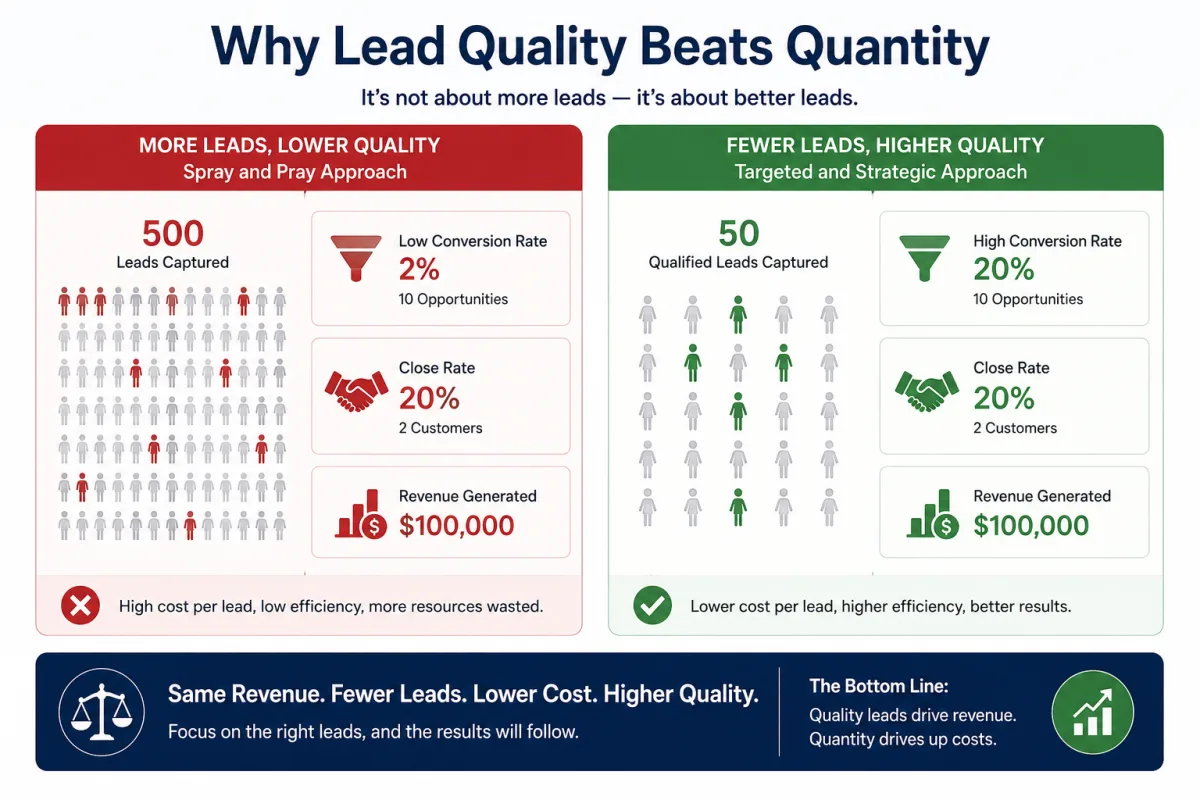
Here's a truth most exhibitors learn the hard way: 50 highly qualified leads > 500 random leads.
What Makes a Lead Qualified
A qualified lead is someone who has demonstrated genuine interest in your solution. They should match your ideal customer profile (ICP) by industry, company size, geography, and role; show concrete interest through questions or demo requests; face a problem your solution solves; and ideally hold buying authority or influence within their organization.
At a trade show, a qualified lead might be someone who:
- Stopped at your booth for 3+ minutes (not just grabbing candy)
- Engaged in a conversation about their specific use case
- Asked a technical question
- Requested a follow-up demo or meeting
Unqualified leads are everyone else who tapped their badge just to scan something or walked by and someone handed them a card.
The Qualification Question
Your booth staff should ask at least one qualifying question before capturing a lead. Examples:
For a registration software booth: "How many attendees do you typically have at your events?" "Are you currently managing registration on a spreadsheet or in software?"
For an A/V vendor: "What's the size of your typical event?" "Do you currently have in-house A/V or contract it out?"
A "no interest" answer means don't capture the lead. Let them walk. Your follow-up will thank you.
Most exhibitors worry about lead count because that's visible and easy to report ("We captured 200 leads!"). Lead quality is harder to measure and requires more training. But it's where the ROI actually lives. Our research shows organizers who implement qualification scoring see 3x better follow-up conversion from exhibitors compared to those who don't.
The Follow-Up Timeline
Here's a realistic follow-up timeline for exhibitor-captured leads:
Day 1–2 (Event Close + 24 Hours)
Follow-up method: Email thank-you + collateral
From: exhibitor's sales team
Message: "Thanks for stopping by our booth. Here's the information we discussed."
Purpose: while interest is hot, keep them engaged. Include a link to a demo or detailed product page.
Expected response rate: 10–20% of qualified leads will click/reply
Days 3–7
Follow-up method: Email #2 with a specific call-to-action
From: the specific sales rep who talked to them
Message: "I wanted to follow up on your question about [topic they asked about]. Can we schedule a 15-minute call this week?"
Purpose: move from interest to conversation.
Expected response rate: 5–10% will engage, 2–5% will agree to a call
Weeks 2–4
Follow-up method: Phone call (if they don't respond to email)
From: sales rep
Message: "Hi [name], we met at [show name]. I wanted to show you how we handle [their specific use case]."
Purpose: break through the noise of email. Phone calls have higher conversion than email.
Expected response rate: 3–5% will take the call, 1–2% will move to a demo
Exhibitor Revenue
What could lead retrieval earn your show?
Lead retrieval is built in, so the fees exhibitors pay a third-party vendor today can go to your show instead. See the number for your floor.
Weeks 4–12
Follow-up method: Demo/trial offer or educational content
From: sales or customer success
Message: "Here's a short demo customized to your use case" or "Here's a case study from [similar company]"
Purpose: move from conversation to proof of value.
Expected response rate: 50% of those who agreed to a demo will complete it, 10–20% will move to proposal stage
Months 3–6
Follow-up method: Proposal, pricing, contract negotiation
From: sales rep + maybe leadership
Message: "Based on your needs, here's a proposal for [solution]"
Purpose: close deals.
Expected response rate: 30–50% of those in proposal stage will close
The Math
Start with 200 leads:
- 20% (40) are qualified
- 25% of those (10) respond to Day 1–2 email
- 50% of those (5) move to a call
- 50% of those (2.5) agree to a demo
- 15% of those (0.375, round to 0 or 1) close
This is why most exhibitors get 200 leads and close 0–2 deals. The funnel is brutal. But if they focus on quality (140 truly qualified leads instead of 200 random), the math changes dramatically:
- 140 leads
- 25% (35) respond to email
- 50% of those (17.5) call
- 50% of those (8.75, round to 9) demo
- 15% of those (1.35, round to 1–2) close
Fewer leads, but better conversion. The quality-first approach transforms from breakeven or negative ROI to meaningful revenue. For organizers looking to help their exhibitors improve these conversion rates, our guide to building exhibitor success playbooks covers the operational practices that drive better outcomes.
How Organizers Improve Exhibitor ROI
You can't force exhibitors to follow up well, but you can make it easier and help them qualify better.
1. Improve Badge Data Quality
The better your attendee data, the better exhibitors can qualify leads. Collect:
- Name, email, company
- Job title (so exhibitors know if they're talking to a decision-maker)
- Industry (so exhibitors know if it's a fit)
- Event attendance goals (are they looking for solutions, comparison shopping, learning?)
The more data you collect, the easier it is for exhibitors to follow up on qualified leads and ignore noise.
2. Enable Exhibitor Lead Filtering and Notes
Let exhibitors tag or rate leads in real-time at the booth:
- "Hot" (immediate follow-up)
- "Qualified" (normal follow-up)
- "Not a fit" (no follow-up)
- Custom fields: "Interested in pricing?", "Decision-maker?", "Budget confirmed?"
This trains booth staff to think about qualification and gives them a system to sort leads post-show.
3. Fast Post-Show Lead Delivery
Deliver lead data to exhibitors within 24 hours, not 2 weeks. First follow-up is most effective when it's fast. Delay kills ROI.
4. Offer Lead Retrieval as a Value-Add
Many exhibitors don't realize they can capture digital leads at your show. If your platform supports badge tapping or QR codes, make this a selling point: "All exhibitors get digital lead capture. Tap a badge, capture their contact info and your conversation notes. Export post-show and follow up immediately."
This is a competitive advantage against shows that still use paper lead cards.
5. Provide Post-Show Benchmarking
Tell exhibitors how they did relative to other exhibitors: "Your booth captured 180 leads. Average lead count for your booth size: 150. Your lead-to-demo conversion: 8%. Industry average: 5%. You're outperforming."
This data lets them understand whether their ROI is typical or exceptional and informs whether they'll re-exhibit.
6. Educate Exhibitors Pre-Show
Send a pre-show email to all exhibitors: "Maximizing Lead ROI at [Show Name]:
- Our average exhibitor qualifies 30–40% of their leads. Here's how to ask the right questions.
- Follow-up within 24 hours: leads decay fast. We'll send you lead data within 24 hours of the show closing.
- Track your conversion: plug leads into your CRM and measure closed deals 6 months post-show.
- Lead quality beats quantity: 50 qualified leads > 500 random captures."
This shifts expectations from "I got 200 leads" to "I need to convert 5% of them."
Lead Retrieval as an Organizer Revenue Center
Here's where organizers often leave money on the table. Lead retrieval can be a profit center, not just a feature.
The A/V Vendor Model (What You're Competing Against)
Traditionally, A/V vendors at trade shows offer lead retrieval. They charge exhibitors:
- $300–$500 per booth for lead capture hardware/software
- Sometimes as high as $2,500+ for enterprise setups
For a 200-booth trade show, 50% adoption = $7,500–$25,000 revenue to the A/V vendor. That's revenue the organizer never sees.
The Organizer-Owned Model
What if you own lead retrieval? You could charge exhibitors:
- $99–$199 per booth for lead capture
- Tiered pricing: $99 for basic (badge tap), $199 for advanced (custom fields, real-time filtering)
For a 200-booth show, 60% adoption = $12,000–$24,000 revenue to you. This changes the math for your entire show.
How to Implement
- Invest in the right platform. Your event software needs to support exhibitor-friendly lead capture, export, and maybe even CRM integration. Most all-in-one platforms (like VenueSight) include this.
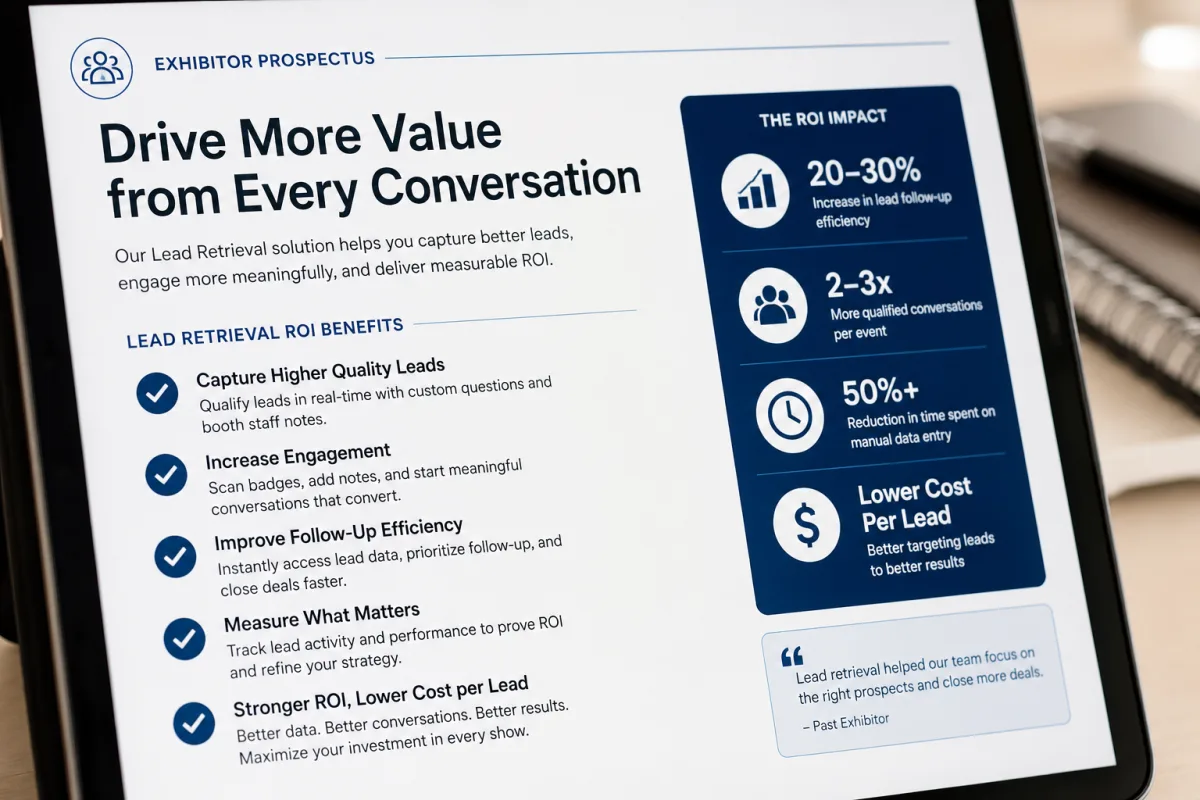
- Market it in the prospectus. Position lead retrieval not as "a feature" but as a service that improves ROI: "All exhibitors get digital lead capture built into our check-in system. Tap a badge, capture their details and your notes. Export to your CRM post-show and follow up in 24 hours. Includes access to attendee data filters so you can qualify leads in real-time."
- Bundle or charge à la carte.
- Option A: Include basic lead capture for all exhibitors (comes with the booth)
- Option B: Charge extra for enhanced features (custom fields, real-time filtering, CRM integrations)
- Option C: Tiered booth packages where premium booths include advanced lead retrieval
- Train exhibitor staff pre-show. Send a guide to all exhibitors on how to use your lead capture system. Make adoption seamless.
- Sell lead retrieval as a ROI-improving service. In your sales conversation, don't say "Our platform has lead retrieval." Say: "Your exhibitors want ROI. We've built lead retrieval into our check-in system so every booth can capture attendee data instantly, rate qualification in real-time, and export leads to follow up within 24 hours. Our exhibitors see 20–30% higher conversion rates because they're following up fast on qualified leads."
Positioning Lead Retrieval in Your Prospectus
Your exhibitor prospectus should explain the ROI story, not just the feature list.
Instead of: "Lead retrieval system included with all booths. Tap attendee badges to capture contact information."
Write: "Drive measurable ROI with our digital lead capture system. Every booth gets access to our real-time lead tapping platform. Capture attendee names, titles, and companies instantly. Tag leads as Hot, Qualified, or Pass—so you're following up on the right people. Export your lead list within 24 hours and start follow-up. Average exhibitor closes 10–30 deals per show. A $500/month deal generates 6x return on your booth investment. Read our exhibitor ROI guide to learn how top exhibitors maximize their results."
Include a link to an exhibitor ROI guide or case study. Show them the math.
Example: ROI Calculator for Exhibitors
Create a simple one-page tool (or embed on your website) where exhibitors can input:
- Booth size and cost
- Average deal value from their industry
- Number of leads they typically capture
- Typical conversion rate
Output: estimated revenue and ROI.
Example:
- Booth cost: $5,000
- Average deal value: $50,000
- Typical leads: 150
- Typical conversion: 5% (7.5 deals)
- Revenue: $375,000
- ROI: 7,400%
This tool doesn't close exhibitors (many won't believe it), but it plants the seed: "If I do this right, I could see significant ROI."
Running Lead Retrieval with VenueSight
VenueSight's exhibitor lead retrieval system lets booth staff tap attendee badges in real-time to capture contact data. Staff can:
- Tap a badge to pull the attendee's name, company, job title, and contact info
- Add custom notes about what the attendee asked or what solution they're interested in
- Tag the lead (Hot, Qualified, No Fit) for post-show prioritization
- Export the full lead list with notes to CSV or connect to their CRM
Post-show, exhibitors log into their portal, see all leads they captured, and can filter by tag or search by company. Export happens within 1 hour of event close, so they can start following up immediately.
VenueSight also ties lead data to badge data (what sessions did they attend, did they visit your booth again, etc.), so you can tell exhibitors: "Your leads came primarily from the Operations track. Here are 3 more attendees from that same session who didn't visit your booth—you might want to reach out."
This combination—fast lead delivery + qualification data + targeting suggestions—meaningfully improves exhibitor ROI, which improves re-exhibition rates and your revenue per booth.
Visit the Exhibitor Lead Retrieval solutions page to learn more, or check out our lead retrieval ROI calculator to see the numbers on your own show.
Frequently Asked Questions
-
Yes. In VenueSight, exhibitors tap attendee badges to capture contact data, tag leads by priority, and export the full lead list with notes to CSV or connect directly to their CRM, with exports available within an hour of event close so follow-up can start immediately.
-
Yes. VenueSight lets organizers own and price lead retrieval directly instead of routing exhibitors to a third-party A/V vendor charging per-booth rental fees, so that revenue goes to the organizer instead of an outside vendor.
-
Yes. VenueSight lets booth staff tag leads, for example Hot, Qualified, or No Fit, and add notes at the moment of the scan, so exhibitors can filter and prioritize follow-up by quality immediately after the show instead of triaging an undifferentiated list.