
The Exhibitor Success Playbook: How Organizers Set Their Trade Show Apart
Exhibitor retention is one of the most reliable revenue drivers for recurring trade shows — and one of the most overlooked. This playbook covers what organizers can do before, during, and after the event to make exhibitors successful, earn their renewal, and turn satisfied exhibitors into your most effective sales tool.
May 18, 2026
The most underpriced asset in trade show management is the exhibitor relationship. Most organizers treat exhibitors primarily as a revenue source: sell the booth, collect the check, see them on move-in day. But exhibitors who have a measurably successful show renew without a sales conversation. Exhibitors who don't see ROI look for a different event next year - or no event at all.
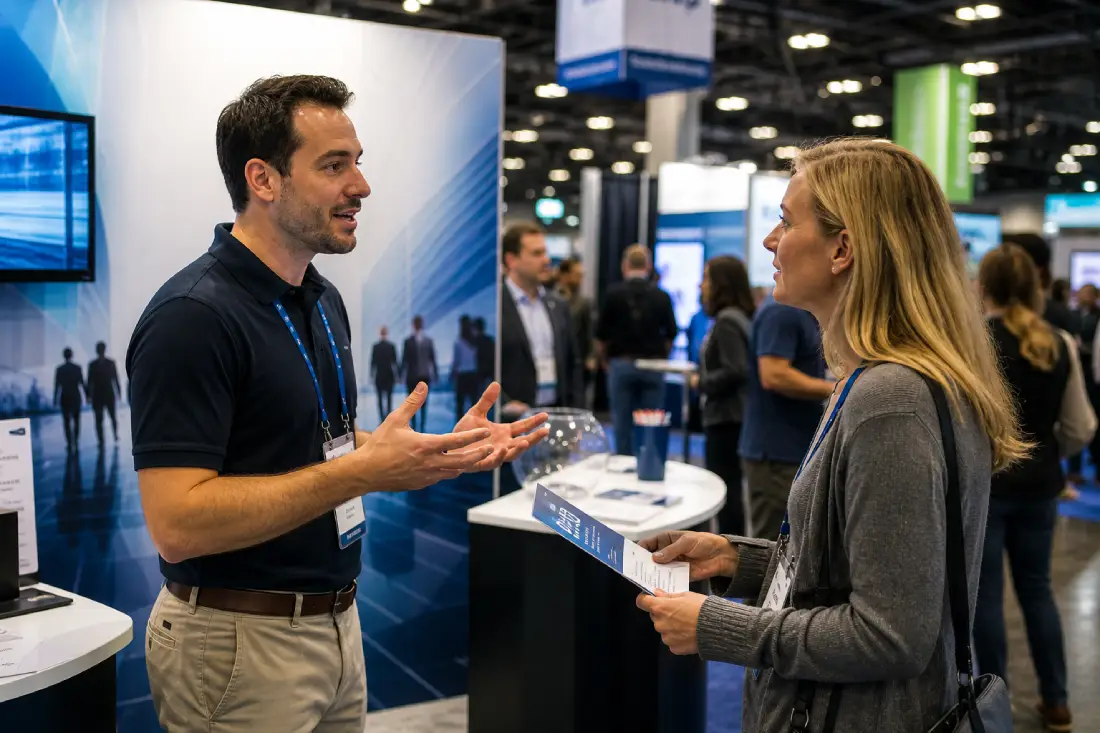
The organizers who build the most sustainable trade show revenue are the ones who systematically set their exhibitors up to succeed, deliver post-event data that proves it, and earn renewals by making the case with evidence rather than promises. This playbook covers how to do that across every phase of the exhibitor lifecycle.
Why Exhibitor Success Is Your Retention Strategy
Trade show exhibitor revenue is largely recurring. A company that exhibits once and has a measurable positive experience will budget for the next year automatically. A company that exhibits once and can't demonstrate ROI will need to be re-sold from scratch - if they come back at all.
The math is significant. If your average booth package is $3,500 and you retain 70% of exhibitors year over year, you enter each sales cycle with 70% of your exhibit hall revenue secured before making a single outbound call. Lift that retention rate to 85% and you dramatically reduce your sales burden while increasing revenue stability.
But exhibitor retention isn't automatic. It requires you to be proactive about two things:
Making exhibitors successful while they're at your show. That means qualified attendee traffic through the exhibit hall, lead retrieval tools that work, and operational support that doesn't create unnecessary friction for booth staff.
Proving they were successful after the show. That means post-event data: lead counts, booth traffic, session attendance by attendee type, and anything else that helps an exhibitor make the case internally for renewing their participation.
Exhibitors don't always come back because the show was good. They come back because they can prove the show was good. Your job is to make both of those things true.
What Exhibitors Actually Measure
Before you can design an exhibitor success program, you need to understand what exhibitors are evaluating when they decide whether to renew.
Lead volume and quality
The primary metric for most exhibitors is how many qualified contacts they captured at the show. "Qualified" varies by company - a leads database full of students and journalists looks different to a vendor selling enterprise software vs. one selling continuing education. Understanding your exhibitors' target buyer profile lets you frame your attendee audience in terms that matter to them in your sales conversations and your post-show reporting.
Face-to-face conversations
Leads captured are a proxy metric. The underlying value is qualified conversations - interactions with real potential buyers. This is harder to quantify but surfaces consistently in exhibitor surveys. Booth traffic that's browsing without intent creates activity without value. Exhibitors distinguish between a show where they "were busy" and one where they "had great conversations."
Brand visibility beyond the booth
Particularly for sponsors with speaking access, logo placements, or session-based activations, brand exposure to the broader audience (not just booth visitors) contributes to their perceived event ROI. Track and report these impressions.
Operational ease
Exhibitors who spend two days solving logistical problems - badges that didn't arrive, lead retrieval that doesn't work, move-in delays, lack of on-floor support - come away with a poor experience regardless of their lead count. Frictionless operations preserve exhibitor energy for what they're there to do: have sales conversations.
Compared-to-last-year trajectory
Returning exhibitors benchmark against their prior experience. A show that's consistent or improving in attendee quality retains exhibitors; one that appears to be in attendance decline loses them first.
Pre-Show: Setting Exhibitors Up Before They Arrive
Everything that goes wrong onsite was preventable during the pre-show phase. Most exhibitor complaints at the show trace back to a setup, communication, or expectation problem that occurred 4–8 weeks earlier.
Define exhibitor deliverables and deadlines clearly
Exhibitors need to know - with specificity and in one place - what they need to submit and by when:
- Booth staff badge names and badge information
- Booth design files (if you're printing graphics or providing display components)
- Product descriptions, company bio, and logo for the event program and app
- Lead retrieval software setup and contact assignment
- A/V or power requirements (if applicable)
- Move-in time slot selection
- Exhibitor manual acknowledgment
If any of these deadlines are missed, it creates downstream work for your team and frustration for the exhibitor when their logo is missing from the program or their booth badges aren't ready. Build automated deadline reminders into your workflow rather than manually chasing each exhibitor.
Set accurate expectations about the show
Exhibitors who arrive expecting 1,500 attendees and encounter 800 will feel misled. Share realistic attendance projections as early as possible. If you have prior year data, share it. If you have registration numbers as the show approaches, share an update.
The risk of transparency here is much lower than the risk of expectation mismatch. An exhibitor who knows the show is smaller than planned has time to adjust their staffing, goals, and strategy. An exhibitor who discovers this on arrival is frustrated and primed to seek a refund.
Pre-event attendee data
Many exhibitors want to see who's coming before the show so they can do outreach, schedule meetings, and prioritize conversations. Sharing an attendee preview (respecting privacy and opt-in/opt-out settings) adds significant pre-show value. At minimum, share aggregate demographic data: "72% of registered attendees are VP-level or above, representing companies with $10M+ in annual revenue." This helps exhibitors calibrate their expectations and prepare relevant materials.
Building an Exhibitor Portal That Reduces Friction
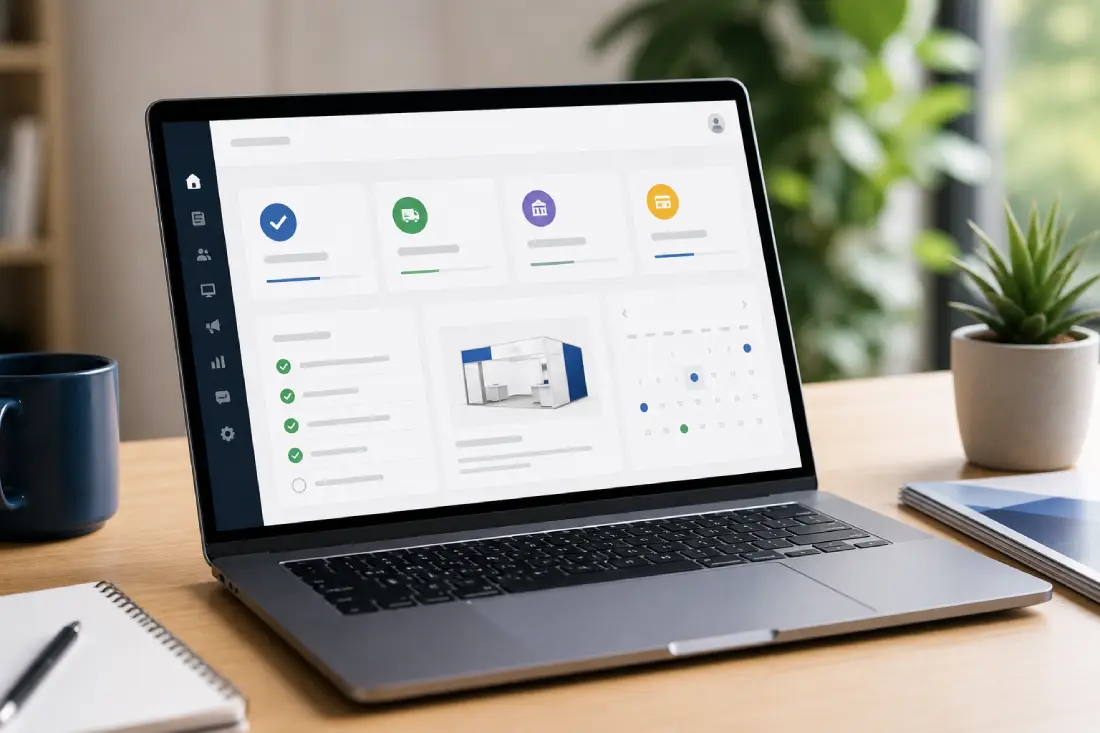
An exhibitor portal is a self-service hub where exhibitors can complete all their pre-show tasks without routing requests through your email inbox. Done well, it dramatically reduces the volume of "how do I..." questions your team fields in the 4–6 weeks before an event.
What an effective exhibitor portal includes
Badge management: Exhibitors can enter, edit, and remove the names on their allocated booth staff badges without contacting the organizer. The portal enforces badge count limits based on the purchased package tier.
Company profile: Text fields for company description, contact information, website, and product categories that flow into the event app and program directory. Exhibitors can update this themselves through any deadline you set.
Lead retrieval setup: Exhibitors can activate lead retrieval licenses for their staff, download the app, and test the scanner before the event. Some platforms allow exhibitors to create their own lead qualification fields (custom questions for booth staff to answer at the moment of scan).
Move-in assignment: If you're using time-slot scheduling for move-in, exhibitors can select their preferred window and see what they're confirmed for.
Resource library: Floor plan, exhibitor manual, venue guide, wi-fi credentials, AV order forms, catering order links - everything in one place, versioned and updated when things change.
Communication history: A log of all messages between your team and the exhibitor, so nothing is lost in individual team members' email threads.
The operational impact of a well-built portal is significant. Events that have moved from email-based exhibitor coordination to portal-based coordination consistently report 60–80% reductions in pre-show administrative email volume.
Pre-Show Communication Timeline
Consistent, structured communication in the weeks before the event is what prevents day-of surprises for exhibitors.
8–12 weeks before the event
- Portal access sent to exhibitor contact
- Exhibitor manual distributed
- Deadlines calendar published (what's due when)
- Lead retrieval information and setup instructions sent
6 weeks before
- First reminder for missing badges, company profiles, and other outstanding items
- Floor plan finalized and shared (exhibitors want to see their position relative to entries, high-traffic areas, and competitors)
- Move-in schedule published
4 weeks before
- Attendee preview / registration count update
- Second reminder for outstanding deliverables
- Lead retrieval app download reminder and test guide
2 weeks before
- Final badge confirmation
- Move-in logistics details (dock access, parking, union labor rules if applicable)
- Onsite contact information and phone numbers for move-in and show days
- Review of lead retrieval functionality
48–72 hours before
- Final reminder with onsite support contact information
- Any last-minute logistics updates (room changes, timing adjustments)
- Check-in instructions for exhibitor badge pickup
Lead Retrieval: The Feature Exhibitors Value Most
Lead retrieval is the single feature that most directly drives exhibitor ROI, and it's consistently the highest-rated item in post-show exhibitor surveys when it works well - and the most-cited complaint when it doesn't.

For a full explanation of how lead retrieval works technically, see the exhibitor lead retrieval guide. From an organizer's perspective, the decisions that matter most are:
Exhibitor Revenue
What could lead retrieval earn your show?
Lead retrieval is built in, so the fees exhibitors pay a third-party vendor today can go to your show instead. See the number for your floor.
Inclusion in packages vs. add-on
Including lead retrieval in all sponsorship packages above a certain tier removes a barrier to adoption. When lead retrieval is an add-on that exhibitors have to discover and purchase separately, a meaningful percentage skip it - and those are the exhibitors most likely to report that they "didn't get enough leads" (because they weren't capturing them systematically).
Exhibitors who use lead retrieval effectively report higher satisfaction and higher renewal rates. Making it easy to access drives the outcomes you're trying to create.
Data that's available immediately
Post-event lead exports should be available as soon as the event ends - not 48–72 hours later, not "after we finalize the data." Exhibitors want to follow up while conversations are fresh. An export that's available Sunday evening for a show that closed Saturday afternoon is a meaningful differentiator.
Qualification fields
The most effective lead retrieval implementations allow exhibitors to add qualification notes at the moment of scan: a dropdown question ("Interest level: Hot / Warm / Cold"), a follow-up action field ("Send demo / Send pricing / Schedule call"), or a free-text notes field for booth staff to capture context. This is what separates a lead capture system from a glorified business card scanner. See the comparison of lead capture approaches for more on how qualification tools affect lead quality.
CRM integration
Exhibitors that can get their leads into their CRM immediately are the ones who get the most follow-up value out of the show. Providing CSV export is table stakes; native integrations with Salesforce, HubSpot, and similar platforms are a competitive differentiator.
Onsite Exhibitor Support
Move-in day and show days are when your relationship with exhibitors either builds confidence or erodes it.
Dedicated exhibitor support contact
Every exhibitor should know, by name and by phone number, who to call if something goes wrong during the show. "Call the main event hotline" is not the same as "call [Name] at [number]." The personal contact signals that you care about their experience, and it gets issues resolved faster.
Floor check-in during setup
Have a team member walk the exhibit hall during move-in to check in with exhibitors actively setting up. This is when you catch problems that are still solvable: an exhibitor who received the wrong booth dimensions, a power outlet that's in the wrong position, a company that didn't receive their badge allocation.
Problems caught during setup take 10 minutes to solve. Problems discovered on show day take an hour and create friction that colors the exhibitor's entire experience.
Proactive exhibitor traffic support
During the show, an experienced organizer actively routes attendee traffic through the exhibit hall. This means: directing general session breaks toward the floor, scheduling exhibitor hours that don't compete with high-demand breakout sessions, running scheduled "exhibit hall hours" (rather than keeping the floor open but empty), and encouraging sponsors and speakers to spend time on the floor.
Exhibitors in low-traffic positions (back corners, ends of aisles) need more attention. A brief personal visit from an organizer to ask how things are going - and to send some traffic their way - makes a difference in how they perceive the show.
Move-In and Move-Out Operations
Move-in and move-out are operationally complex and exhibitor-facing. Poor execution here undermines even a strong show day.
Staggered move-in scheduling
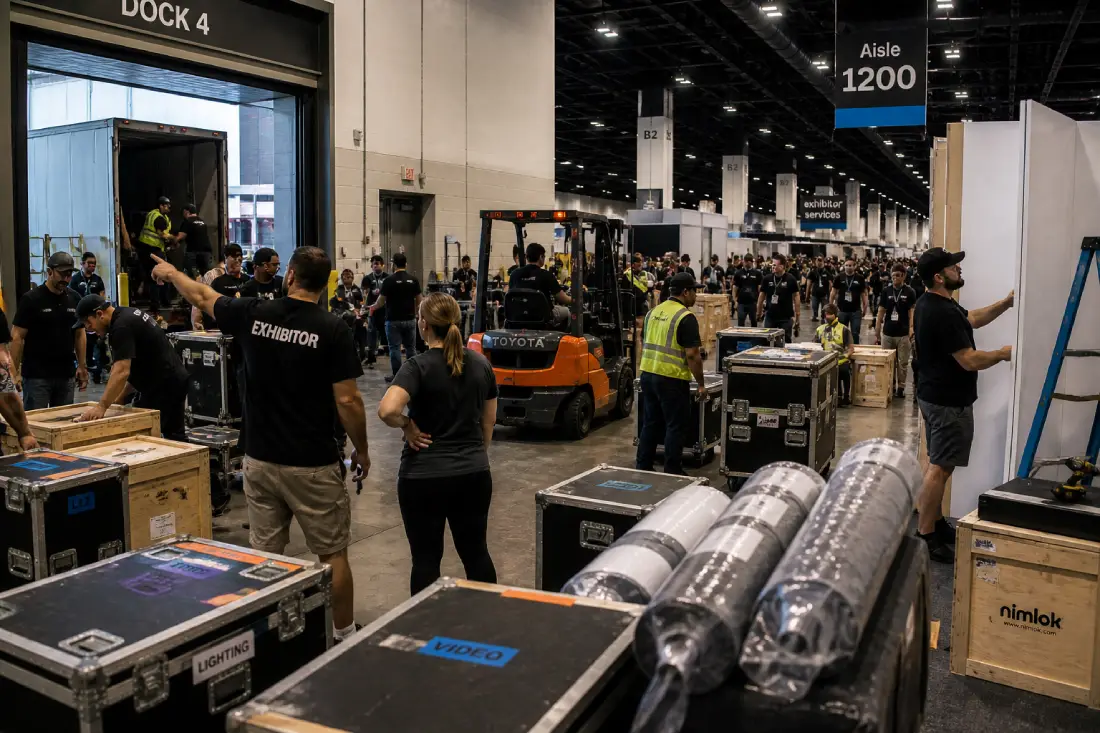
Avoid a window where 50 exhibitors are all trying to access the loading dock at the same time. Time-slot-based move-in scheduling (30–60 minute windows, assigned based on booth size and position) keeps the flow manageable and prevents the dock gridlock that turns a simple setup into a 3-hour ordeal.
Communicate move-in slots in advance, confirm them 48 hours before, and have staff at the dock to direct traffic and answer questions.
Labor rules and venue constraints
Many convention centers have union labor requirements: only union members can operate forklifts, hang signage above a certain height, or run electrical connections. Failing to communicate this to exhibitors in your manual creates day-of surprises that damage trust and generate complaints.
Include a clear section in your exhibitor manual that covers union jurisdiction, what exhibitors can do themselves vs. what requires labor, and how to order labor services through the venue.
Move-out efficiency
Move-out is the last impression your exhibitors have of the show. Having sufficient drayage support, clear move-out windows, and accessible dock access sends them off on a positive note. Chaotic move-out - where exhibitors wait 90 minutes to access the loading dock with their materials - is remembered.
Post-Show Deliverables That Drive Renewal
What you deliver after the event determines whether exhibitors renew. This is where organizers most consistently underperform.

What a great exhibitor report includes
Lead retrieval data: Complete export of scanned leads with qualification notes, available within 24 hours of event close.
Traffic analytics: If your check-in system tracks badge scans at entry points or session doors, you can report on when attendee traffic peaked and where it concentrated. Exhibitors use this to understand whether their booth position got the flow they expected.
Audience summary: Final attendee demographics - job titles, company sizes, industries - confirmed against the preview data you shared pre-show. This gives exhibitors the full picture of who was in the room.
Sponsorship impression summary: For sponsors with branding beyond the booth - mentions in emails, logo in materials, session sponsorships - a summary of estimated impressions (email send volume, app installs, session attendance) shows the full scope of their visibility.
A "see you next year" packet: Include 2026 event dates, early exhibitor pricing (if applicable), and a deadline for renewing at the current year's rate. The time immediately after a show is the highest-conversion moment for renewal conversations; don't waste it.
Timing matters
The best post-show report is one delivered Monday morning after a weekend show. Every day of delay reduces its impact. Exhibitors are most motivated to make renewal decisions when the show is fresh - when conversations are still vivid and the energy of the event is still with them.
Measuring and Acting on Exhibitor Satisfaction
Post-event exhibitor surveys are the most underutilized data source in trade show management.
When to send
Within 48 hours of the event closing. Earlier response rates are significantly higher; satisfaction recall is more accurate.
What to ask
Keep it to 5–7 questions:
- Overall, how satisfied were you with your participation? (1–5 scale)
- How would you rate the quality of leads you captured? (1–5)
- How would you rate attendee traffic through the exhibit hall? (1–5)
- How would you rate the support you received from the organizing team? (1–5)
- How likely are you to exhibit again next year? (1–5, Net Promoter-style)
- What was the single most valuable aspect of your participation?
- What is the one thing we should change before next year?
What to do with the data
Act on it visibly. If 60% of exhibitors rated hall traffic below a 3, change something about how you structure exhibit hall hours and communicate that change to exhibitors before next year's prospectus goes out. When exhibitors see that their feedback produced a tangible change, they trust the feedback loop - and they renew.
Contact your detractors personally. An exhibitor who rated their experience a 2 out of 5 is worth a phone call. Understanding specifically what went wrong and demonstrating that you care about their experience converts a likely non-renewal into a potential advocate.
Managing the Full Exhibitor Lifecycle with VenueSight
VenueSight's trade show tools are built around the organizer-exhibitor relationship as an ongoing, managed workflow - not just a booth booking transaction.
From the moment a booth is sold, exhibitors get portal access that guides them through every pre-show deliverable: badge assignments enforced by their package tier, company profile submission, lead retrieval activation, and move-in scheduling. Automated deadline reminders go out without manual intervention, so your team's inbox isn't the coordination bottleneck.
Lead retrieval is built into the same platform your attendees use for check-in. When an exhibitor staff member scans a badge, the scan pulls from live registration data - every attendee badge is automatically scannable, with no additional setup required from the organizer. Lead exports are available to exhibitors immediately when the event ends.
Post-event, exhibitor reports pull automatically from check-in data, lead retrieval records, and session tracking. You can deliver a complete exhibitor summary within hours of your show closing - not days.
VenueSight's trade show solution covers the full exhibitor management feature set, from portal configuration through post-show reporting. For more on how lead retrieval works from the exhibitor's perspective, see the exhibitor lead retrieval guide. If you're still building your exhibitor sales process, see how to write an exhibitor prospectus for package structuring and pricing strategy. Or book a demo to walk through how exhibitor management works for your specific show.