
Master Event Attendee Engagement: The Complete Strategy Guide
Discover how to boost attendee engagement before, during, and after your events. Data-driven strategies, tools, and best practices for event professionals.
December 18, 2025
Event attendance is only half the battle. What separates successful events from forgettable ones is the quality of attendee engagement—both during the event and beyond. As we move through 2025 and 2026, event professionals face a critical challenge: how do you keep attendees engaged, satisfied, and likely to return for future events?
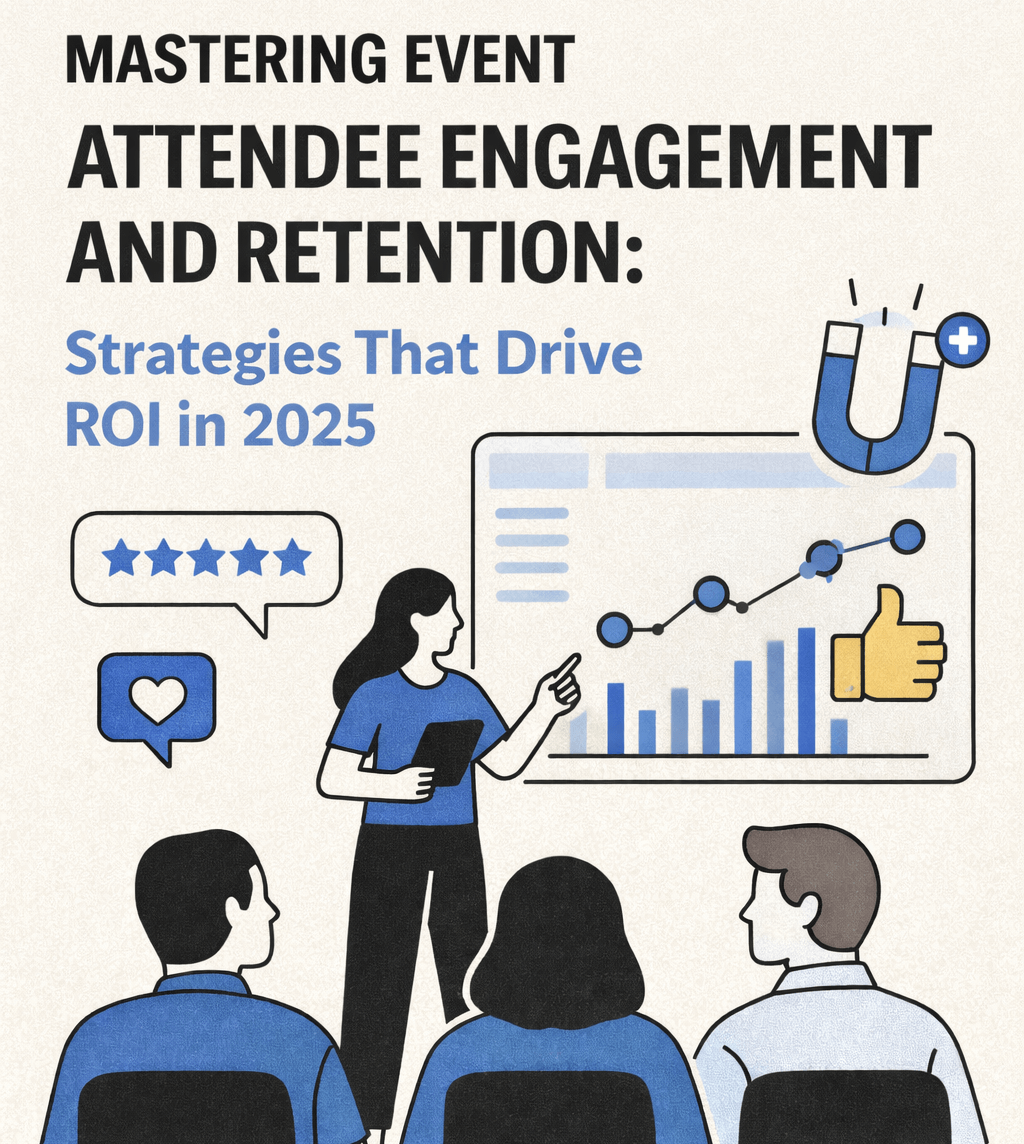
According to Bizzabo's 2025 State of Events Report, organizations that prioritize attendee engagement and leverage modern engagement strategies see significantly higher event returns and better attendee retention compared to those that don't. Research shows 78% of organizers consider in-person events their most effective marketing channel, with attendees actively seeking meaningful engagement opportunities.
This comprehensive guide explores the most effective event attendee engagement and retention strategies for 2025 and 2026. Whether you're planning a small conference, a large-scale trade show, or a hybrid event, these data-driven approaches will help you create memorable experiences that drive measurable business results.
Why Attendee Engagement Matters: The Business Case
Before diving into tactics, it's important to understand why engagement directly impacts your bottom line.
The Engagement-ROI Connection
Engaged attendees are more likely to:
- Spend more on booth interactions, premium experiences, or additional registrations
- Generate qualified leads through meaningful networking conversations
- Become repeat attendees (increasing lifetime event value significantly)
- Become brand advocates through social sharing and word-of-mouth referrals
- Provide valuable feedback that improves future events
According to Amra and Elma's 2025 Event Planning Marketing Statistics, 52% of marketers attribute at least half of their closed deals to events, and 72% of respondents noted that deals close faster when prospects attend events—with many experiencing a reduction in the sales cycle by 20-30 days. This demonstrates that investing in engagement isn't just about making your current event better—it's about building a sustainable audience and revenue stream for years to come.
The Personalization Premium
Modern attendees expect personalization. According to Remo's 2025 Event Industry Statistics, 89% of marketers are prioritizing personalized experiences, and attendees are significantly more likely to return to events that offered tailored experiences.
The Swapcard State of Event Engagement Report found that AI-driven recommendations can increase networking acceptance rates by 45%, with connection acceptance rates rising nearly 55%. This represents a powerful opportunity for event professionals to leverage technology for engagement.
Pre-Event Engagement: Building Momentum Before Day One
Great engagement doesn't start at the venue. It starts the moment someone registers for your event.
Strategy 1: Personalized Pre-Event Communication
Avoid generic email blasts. Instead, segment your attendee list and send targeted, relevant communications based on:
- Registration data (job title, industry, company size)
- Event role (attendee, sponsor, exhibitor, speaker)
- Past behavior (first-time attendees vs. returning attendees)
- Session interests (indicated during registration)
Practical Implementation:
- Create 4-5 attendee personas based on your registration data
- Design separate email sequences for each persona
- Include personalized session recommendations based on their interests
- Share speaker bios and highlights that align with their professional goals
Example: A DevOps engineer registering for a tech conference should receive different pre-event communication than a VP of Sales attending the same event. Suggest relevant breakout sessions, networking opportunities with peers in their role, and exhibitors that align with their technical needs.
Strategy 2: Interactive Pre-Event Content
Engagement begins before attendees arrive. Build momentum through:
- Virtual networking lounges where attendees can connect before the event
- Pre-event surveys that gather interests and preferences
- Exclusive pre-event webinars featuring key speakers
- Community forums where attendees can introduce themselves and ask questions
- Interactive teaser content on your event website and social channels
According to Swapcard's research, events that opened their engagement platforms three weeks prior saw peak activation eight days before the event, allowing for five additional days of user onboarding and engagement building.
Strategy 3: Setting Clear Expectations
Unclear agendas and vague session descriptions lead to disappointed attendees. Instead:
- Publish detailed session descriptions with learning outcomes
- Share speaker backgrounds and expertise areas
- Create a mobile event app where attendees can browse sessions weeks in advance
- Enable early agenda customization so attendees plan their experience before arrival
- Set engagement goals (e.g., "Connect with 3 vendors," "Attend 2 networking sessions")
When attendees know what to expect and how to prepare, they arrive motivated and ready to engage.
During-Event Engagement: Maximizing Real-World Interactions
The event itself is where engagement strategies have the most immediate impact.
Strategy 4: Intelligent Networking and Matching
One of the top reasons attendees cite for attending events is networking opportunities. Yet many events leave networking to chance, resulting in missed connections and disappointed attendees.
AI-Powered Matching: Modern event platforms use machine learning to suggest meaningful networking matches based on:
- Role, industry, and company information
- Session interests and learning goals
- Geographic location (for in-person connection)
- Specific business challenges or interests indicated during registration
Practical Implementation:
- Enable "matchmaking" features in your event app
- Send daily meeting suggestions to attendees based on their goals
- Create designated "networking zones" with seating arranged for optimal conversation flow
- Facilitate 1-on-1 meetings through scheduled time slots
According to Swapcard's State of Event Engagement Report, AI-driven networking recommendations can increase networking acceptance rates by 45%, demonstrating the significant impact of intelligent matching on attendee connections.
Strategy 5: Gamification and Incentives
Gamification transforms passive attendance into active engagement. Consider:
Point-Based Systems:
- Award points for session attendance, booth visits, and networking conversations
- Create tiered rewards (bronze, silver, gold levels)
- Offer exclusive perks at higher levels (VIP lounge access, premium swag, speaking opportunities)
Competitive Challenges:
- Leaderboards for booth visits or networking conversations
- "Quest" style challenges (e.g., "Visit 5 exhibitors in the tech category")
- Live competitions with prizes (trivia, speed networking, innovation pitches)
Social Engagement:
- Hashtag campaigns with engagement metrics displayed on event screens
- Photo contests with live voting
- Social media scavenger hunts
Gamification has proven effective in driving attendee participation and satisfaction across the event industry.
Strategy 6: Real-Time Personalization
During the event, continue personalizing the experience:
- Dynamic session recommendations based on which sessions attendees have already attended
- Real-time agenda adjustments if certain sessions fill up or if attendees need alternatives
- Personalized push notifications reminding attendees about upcoming sessions that match their interests
- Smart lead capture that immediately alerts exhibitors to qualified visitors
The goal is to ensure that every attendee's event path feels uniquely designed for them, not like they're following a predetermined route.
Strategy 7: Sponsor and Exhibitor Engagement Strategies
Exhibitors and sponsors are a critical component of event ROI, but many struggle to attract qualified attendees to their booths. Help them succeed:
Lead Capture Integration:
- Enable exhibitor booth scanning and lead capture through the event app
- Provide real-time lead intelligence (job title, company, specific interests)
- Auto-populate lead forms with pre-filled attendee information
Engagement Metrics:
- Show exhibitors live dashboards tracking booth traffic and lead quality
- Highlight top-performing exhibitors to create friendly competition
- Provide insights on which attendee segments are visiting specific booths
Exhibitor Support:
- Provide pre-event coaching on best practices for booth engagement
- Share attendee data to help exhibitors prepare targeted pitches
- Facilitate exhibitor-attendee matchmaking before the event
According to Swapcard's research, 40% of lead generation occurs before events, with online booth visits accounting for 44% of leads, highlighting the importance of integrated digital strategies for sponsor success.
Post-Event Engagement: Converting Momentum Into Results
The event ends, but the engagement shouldn't. The post-event period is crucial for converting temporary connections into lasting relationships and measuring ROI.
Strategy 8: Immediate Post-Event Follow-Up
Strike while the iron is hot. Within 24-48 hours of event conclusion:
Event Analytics
Track these numbers without building the spreadsheet
Registrations, revenue, attendance, session demand and exhibitor performance, live in the same platform that runs the event.
For Attendees:
- Thank you emails with personalized key takeaways
- Links to session recordings and presentation slides
- Automatically facilitated introductions between attendees who expressed interest in connecting
- Surveys asking about their most valuable sessions, speakers, and networking connections
- Special offers from sponsors or exhibitors they visited
For Exhibitors/Sponsors:
- Lead summaries and attendee contact information
- ROI dashboards showing booth traffic, lead quality, and engagement metrics
- Thank you videos or notes from key stakeholders
- Renewal incentives while the experience is still fresh
Strategy 9: Building Post-Event Community
The most sophisticated event programs view the event as a touchpoint in a longer-term community. Consider:
Dedicated Online Communities:
- Private LinkedIn groups for past attendees
- Exclusive Slack communities for specific attendee segments (e.g., all VPs of Marketing who attended)
- Forum-based discussion spaces where attendees can continue conversations post-event
Content Continuation:
- Monthly newsletters featuring exclusive content and resources
- Recorded "office hours" with key speakers and thought leaders
- Curated resources and articles relevant to attendee interests
- Q&A sessions addressing questions that emerged at the event
Event Alumni Programs:
- Special pricing for returning attendees
- Early access to next year's agenda
- Exclusive virtual events between annual conferences
- Speaking or panel opportunities for engaged alumni
Strategy 10: Retention Metrics and Continuous Improvement
Track what matters. According to Remo's Event Industry Statistics, 95% of marketers are tracking end-to-end ROI, underscoring the importance of measurement in event success.
Engagement KPIs:
- Session attendance rates (broken down by session type and attendee segment)
- Booth interaction rates and average time spent per booth
- Networking conversations initiated and completed
- Gamification participation rates
- Post-event survey completion rates
- Click-through rates on post-event emails
Retention Metrics:
- Return attendee rate (year-over-year)
- Sponsor/exhibitor renewal rate
- Attendee Net Promoter Score (NPS)
- Customer lifetime value for attending events
- Referral rate (new attendees who were referred by past attendees)
Business Impact Metrics:
- Qualified leads generated
- Sales pipeline value created
- Conversion rates from leads to customers
- Average deal size for event-sourced customers
- Revenue attributed to event-driven relationships
Create a dashboard tracking these metrics post-event, and use the insights to continuously refine your engagement strategies.
Technology Enablement: Tools for Modern Event Engagement
While strategy is paramount, the right technology platform can dramatically amplify your engagement efforts.
Event Management Platform Capabilities
Modern event platforms should provide:
Data Integration:
- Single source of truth for all attendee information
- CRM integration to track post-event engagement
- Pre-event registration data flowing into personalization engines
- Real-time data capture during the event
Personalization Engine:
- AI-powered content recommendations
- Attendee matching algorithms
- Behavioral triggered communications
- Dynamic agenda customization
Attendee Experience:
- Intuitive mobile event app
- Personalized notifications and reminders
- Easy session browsing and schedule management
- Seamless booth and exhibitor browsing
Exhibitor Tools:
- Lead capture and management
- Real-time analytics dashboards
- Badge scanning for qualified lead identification
- Post-event lead follow-up tools
Community Management:
- Post-event networking features
- Content libraries for ongoing engagement
- Discussion forums and Q&A capabilities
- Alumni program management
According to Remo's 2025 Event Industry Statistics, approximately 70% of event planners are utilizing AI tools for personalization and logistics, demonstrating the critical role of technology in modern event engagement.
Platforms like VenueSight, Whova, and Bizzabo excel at providing these integrated capabilities, enabling event professionals to orchestrate engagement across the entire attendee journey.
Real-World Case Study: Engagement in Action
Consider how a mid-sized tech conference (2,500 attendees) increased engagement and ROI:
Pre-Event:
- Segmented attendees into 4 personas (CTOs, engineering managers, individual contributors, students)
- Sent personalized content sequences to each group
- Facilitated 300+ pre-event networking matches
During-Event:
- Implemented gamification with daily leaderboards
- Used AI matching to facilitate 450+ unscheduled networking conversations
- Captured 2,100 qualified leads for sponsors
- Achieved 89% session attendance rate (industry average: 62%)
Post-Event:
- Sent personalized follow-ups within 24 hours to all attendees
- Facilitated 200+ post-event introductions between attendees
- Created exclusive alumni community with 1,600+ active members
Results:
- 67% attendance rate (industry average: 55%)
- 87% return attendee rate the following year (industry average: 45%)
- 42% of generated leads converted to sales within 6 months
- $4.20 ROI for every $1 spent on the event (industry average: $2.80)
- Attendee NPS of 72 (excellent; industry average: 58)
Putting It All Together: Your Engagement Strategy
Implementing all these strategies at once isn't necessary—start with what aligns best with your event type and audience.
For small conferences (200-500 attendees):
- Focus on personalized pre-event communication and networking
- Implement basic gamification
- Prioritize quality post-event follow-up
For mid-size events (500-5,000 attendees):
- Add AI-powered networking matching
- Implement comprehensive gamification
- Build exhibitor support infrastructure
- Create post-event community touchpoints
For large conferences and trade shows (5,000+ attendees):
- Full AI personalization across the journey
- Advanced exhibitor analytics and support
- Sophisticated community and alumni programs
- Year-round engagement infrastructure
Key Takeaways
- Engagement drives retention, and retention drives sustainable event ROI
- Personalization is non-negotiable in 2025—attendees expect tailored experiences
- Engagement starts before day one with targeted pre-event communication
- Technology enables engagement but strategy is what matters most
- The post-event period is critical—it's where connections become relationships
- Measure what matters—track engagement, retention, and business impact metrics
- Continuous improvement should be built into your process
Conclusion
Event attendee engagement is both an art and a science. It requires understanding your audience, designing meaningful experiences, leveraging technology effectively, and continuously measuring and optimizing.
The events that will thrive in 2025 and beyond are those that recognize that engagement isn't a feature—it's a philosophy. It's the commitment to creating experiences where every attendee feels valued, understood, and positioned for success.
Whether you're planning your next conference, trade show, or corporate event, the strategies outlined in this guide will help you create deeper engagement, stronger retention, and measurable business results.
Ready to transform your event engagement strategy? Learn how VenueSight helps event professionals implement these best practices through our comprehensive event management platform designed for registration, check-in, exhibitor management, and real-time engagement.
Related Reading
Sources & References
- Bizzabo - 2025 State of Events Report - https://welcome.bizzabo.com/state-of-events-2025
- Comprehensive insights on event industry trends, attendee preferences, and engagement best practices based on survey of 1,500+ event professionals
- Bizzabo - 2025 Event Networking Report - https://welcome.bizzabo.com/event-networking-report-2025?hsLang=en
- Data on networking as primary driver of event value, AI-powered matchmaking, and attendee engagement strategies
- Cvent - 116 Event Statistics Shaping the Industry in 2025 - https://www.cvent.com/en/blog/events/event-statistics
- Industry benchmarks on meeting professional spending, event growth projections, and ROI trends
- Remo - Event Statistics 2025: Trends & Strategies - https://remo.co/blog/event-industry-statistics
- Data on hybrid/virtual event adoption, AI tool usage (70% of planners), and personalization priorities (89% of marketers)
- Swapcard - State of Event Engagement Vol. 2 Report - https://www.swapcard.com/resources/state-of-event-engagement-report-volume-2
- Research on 500+ events and 500,000 users covering:
- AI-driven networking recommendations: 45% increase in acceptance rates, 55% rise in connection rates
- Pre-event platform activation timing and impact
- Lead generation patterns (40% occur pre-event, 44% from online booth visits)
- Session engagement metrics by tier
- Research on 500+ events and 500,000 users covering:
- Amra and Elma - Top 20 Event Planning Marketing Statistics 2025 - https://www.amraandelma.com/event-planning-marketing-statistics/
- Key statistics:
- 78% of organizers consider in-person events their most effective marketing channel
- 52% of marketers attribute at least half of closed deals to events
- 72% note deals close faster when prospects attend events (20-30 day reduction in sales cycle)
- 78% of marketers utilized event technology in past year
- Key statistics:
- Thunder Bit - Event Marketing in 2025: 40 Key Statistics You Should Know - https://thunderbit.com/blog/event-marketing-statistics
- Global events market projections, attendee format preferences, and sustainability priorities
- ON24 - 5 Marketing Engagement Metrics You Need To Measure Your ROI in 2025 - https://www.on24.com/blog/5-engagement-metrics-you-need-to-measure-your-roi/
- Key engagement metrics for measuring event ROI including engagement rate, conversion rate, content consumption, and lead generation