
Running a Conference With 10,000+ Attendees: The Software and Operations Checklist
A practical checklist for registration, staffing, check-in, and exhibitor operations at 10,000+ attendee conferences, where mid-size playbooks stop working.
November 3, 2026
A conference crosses into a different operational category somewhere around 10,000 attendees, not because the tasks change but because the margin for manual workarounds disappears. Registration data accuracy, check-in throughput, exhibitor floor coordination, and team access control all have to be designed for the scale from the start, because a process that's merely inconvenient at 2,000 attendees becomes a genuine failure point at 10,000. This checklist walks through what actually changes at this scale, the specific math and structure each area needs, and the failure patterns that show up when organizers try to run a five-figure-attendance event on tools and processes built for something smaller.
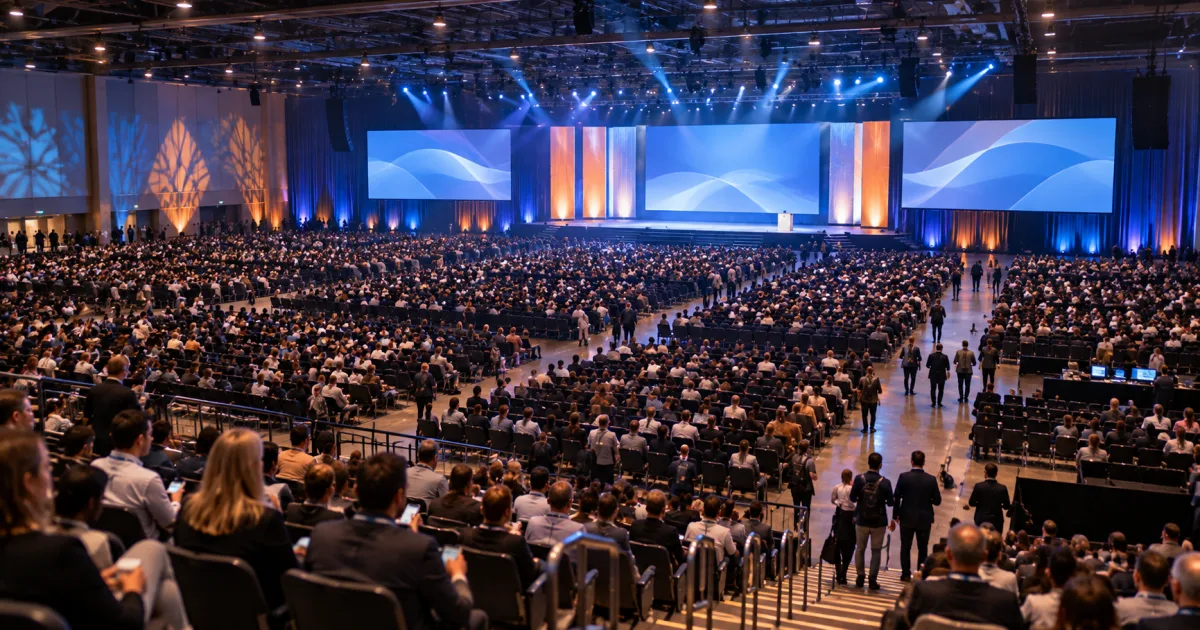
What Actually Changes at 10,000+ Attendees
The instinct is to think of a 10,000-attendee conference as a 2,000-attendee conference multiplied by five, and plan accordingly: five times the check-in stations, five times the staff, five times the badges. That math is directionally right for some things and badly wrong for others.
What scales linearly: badge stock, printer count (within reason), and the raw volume of registration records. What doesn't scale linearly: coordination overhead. A 2,000-attendee event can often run with one operations lead who personally knows the state of every workstream. At 10,000 attendees, that's no longer physically possible: the event requires multiple teams working in parallel, which means the software has to support role-based access, concurrent editing, and a shared source of truth, not just more capacity on the same single-operator tool. The organizers who get surprised at this scale are almost always surprised by a coordination failure, not a capacity failure: two teams working from different exports of the same exhibitor list, a check-in change made in one system that never reached the badge printer, a staffing plan built against last year's arrival curve that doesn't hold at double the volume.
The rest of this checklist is organized around that distinction, what needs more capacity, and what needs a fundamentally different operational structure.
Registration Architecture for Five-Figure Attendance
Ticket Types and Data Accuracy at Volume
Complex ticket structures are normal at this scale: multiple attendee categories (member, non-member, student, press, VIP, staff), add-on sessions with independent capacity limits, group and team registration for corporate blocks, and often multiple currencies or regional pricing tiers for events that draw an international audience. None of that is unique to large events, but the volume changes what a data error costs. A 0.5% duplicate-registration rate is a rounding error at 500 attendees and a genuine reconciliation project at 10,000: that's 50 duplicate records to find and merge, each one a potential double-charge or a badge printed twice.
Deduplication needs to happen at the point of registration, matching on email and name variants before a duplicate record is created, not as a cleanup pass the week before the show. Waitlist and capacity enforcement needs to be real-time and automatic for the same reason: a session cap that's checked once a day instead of at the moment someone registers will overshoot at this volume, and the fix (bumping already-confirmed attendees) is a worse conversation than preventing the overshoot in the first place.
Import and Migration at Scale
Large conferences, especially annual events with an established base, often need to import historical attendee data, association membership records, or a corporate client list of pre-registered attendees. At 10,000+ records, a manual CSV cleanup process that would be tedious but manageable at 500 records becomes a multi-day project prone to silent errors, a misaligned column shifts every record by one field, and nobody notices until badges print wrong. Validate imports against a schema before they load, and spot-check a statistically meaningful sample (not just the first ten rows) before treating an import as complete.
Staffing and Check-In Throughput Math
This is the area where the "just scale up linearly" instinct causes the most visible, immediate damage, because a check-in bottleneck is the first thing 10,000 people experience and the hardest thing to quietly fix once doors are open.
The Actual Formula
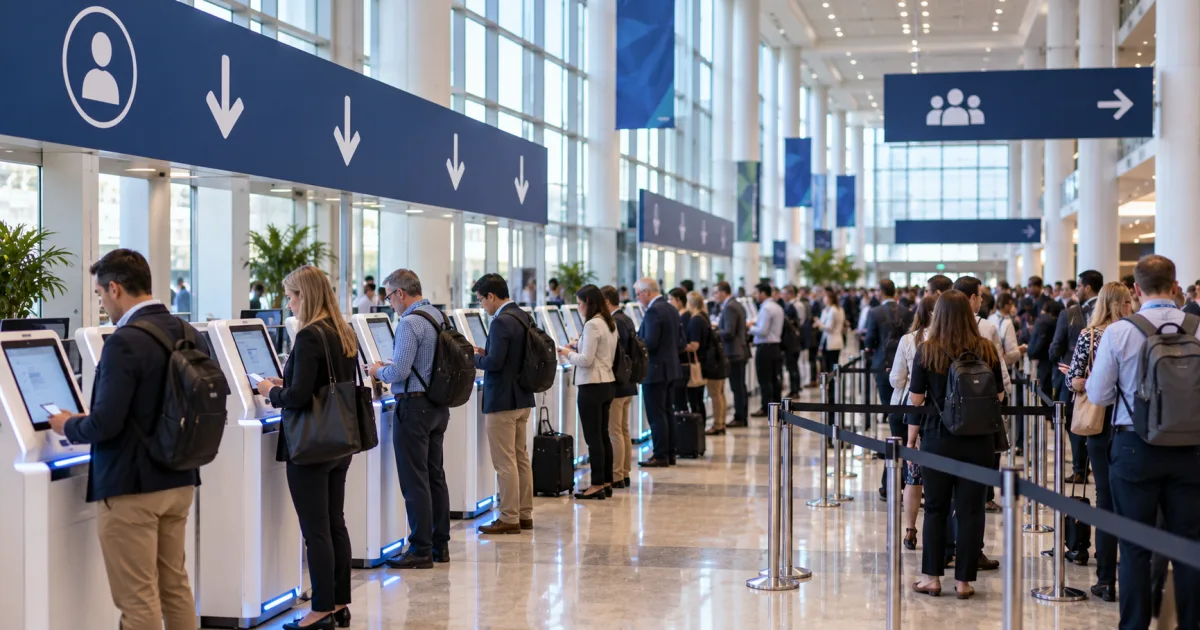
The number that matters isn't total attendees divided by total event hours. It's peak arrival rate divided by per-station throughput. If 35% of a 10,000-attendee conference arrives in the first 90 minutes (a realistic, even conservative, peak for a single-day general session opener), that's 3,500 people needing to check in within 90 minutes. A staffed mobile-scanning station processes an attendee in roughly 15-30 seconds; at 25 seconds per check-in, one station clears about 216 people per hour, or 324 in 90 minutes. Covering 3,500 arrivals in that window requires roughly 11 concurrently staffed stations running at full efficiency, not the 4-5 that a naive "total attendees / total stations used at smaller events" ratio would suggest.
Self-service kiosks with badge printing run closer to 20-30 seconds per person including lookup, which is comparable throughput to a staffed station but doesn't require a staff member at every unit. The tradeoff is needing enough kiosks clustered with clear signage and a staffed exception lane for people whose registration doesn't resolve cleanly (a name mismatch, a last-minute substitution, a payment issue). At 10,000+ attendees, most events end up running a hybrid: a bank of kiosks for the bulk of confirmed pre-registrants, staffed stations for VIPs, press, and exceptions, and a visibly separate line for on-site/walk-in registration so it doesn't bottleneck the pre-registered flow.
Staffing the Exhibitor Floor Separately
At 10,000+ attendees, the exhibitor floor is frequently 100-300+ booths, and exhibitor staff check-in needs to run as its own process, not folded into general attendee check-in. Exhibitor staff typically arrive earlier (often before doors open, for setup and staff badge pickup), need different access levels (floor access without a general-session ticket), and show up in a volume that's small relative to total attendance but concentrated in a tight pre-show window. Treating it as the same queue as general attendees creates a bottleneck for both groups during the highest-stakes arrival window of the show, the exhibitor staff waiting behind a line of confirmed general attendees, and the general attendees waiting behind exhibitor staff trying to sort out booth-specific badge details.
Multi-Team Operations and Role-Based Access
A 10,000+ attendee conference is run by a team, not a person, and the software has to reflect that structurally, not just allow multiple logins. Registration managers, check-in staff, exhibitor coordinators, session/speaker managers, finance, and executive stakeholders all need access to different slices of the same event data, simultaneously, without stepping on each other's changes or seeing information they don't need.
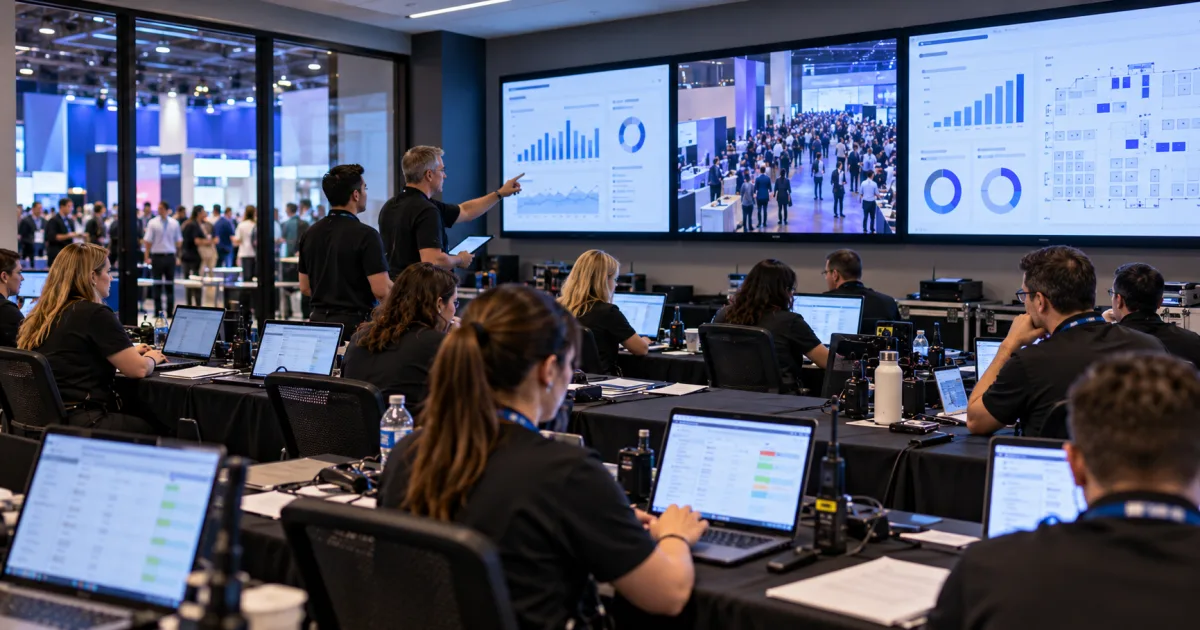
Role-based access control matters here for two separate reasons: security (finance shouldn't need to see attendee session selections; check-in staff shouldn't need access to revenue reporting) and operational clarity (a team member who can only see the tools relevant to their job makes fewer mistakes than one navigating a full admin panel looking for the three screens they actually use). Events at this scale also frequently involve outside staffing agencies or volunteer coordinators for day-of check-in, a role structure that can grant scoped, temporary access to a large day-of staff without handing out full admin credentials is a real operational need, not a nice-to-have.
Audit Trails and Accountability
With multiple people making changes to the same exhibitor records, session capacities, and registration data, an audit trail, who changed what, and when, stops being a compliance nicety and becomes the fastest way to resolve the inevitable "why does this booth show the wrong size" conversation during move-in week. Without one, tracing a data discrepancy back to its source becomes a multi-person, multi-hour investigation instead of a two-minute lookup.
The Exhibitor Floor at Scale
Large conferences with 10,000+ attendees frequently carry an exhibitor or sponsor floor with dozens to hundreds of booths, and the coordination challenges compound with size in the same way check-in does. Placement requests (competitor separation, proximity to a keynote stage, accessibility needs) accumulate fast, a floor with 200 booths and even a modest rate of requests can mean 40-50 constraints to satisfy simultaneously, a genuinely hard manual puzzle once the floor plan lives in a static tool disconnected from the exhibitor database.
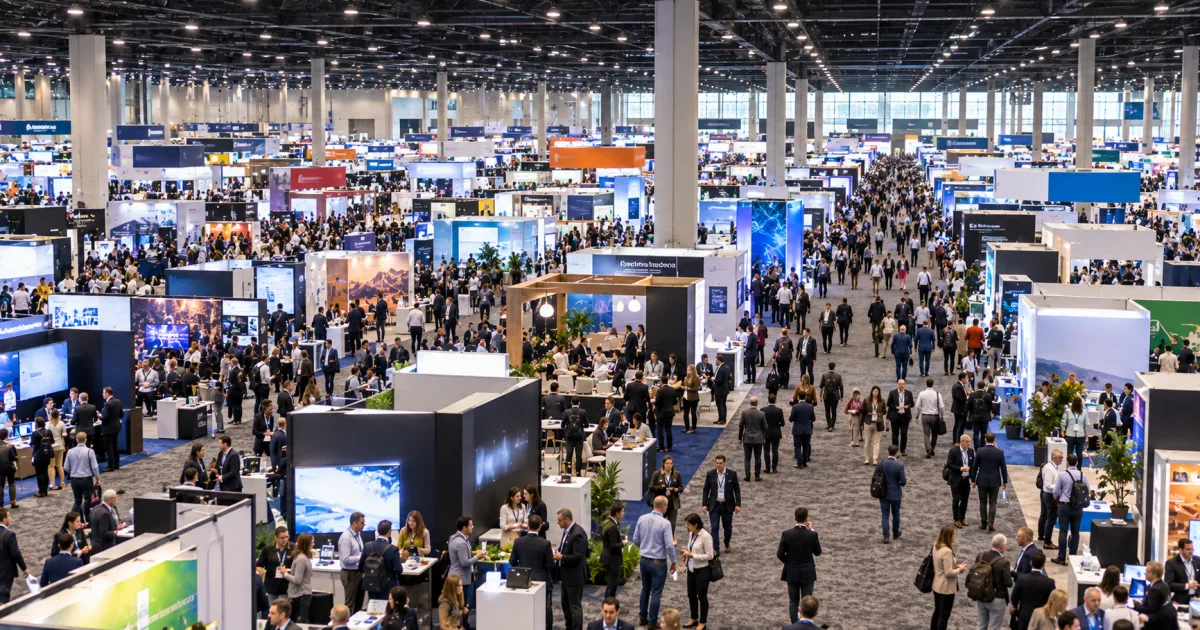
An interactive floor plan tied directly to exhibitor and booth-sales records avoids the staleness problem that plagues a manually re-exported PDF: a booth reassignment, cancellation, or upgrade updates everywhere it matters (the public-facing map, the badge printing list, the staff pass allocation) without someone remembering to push a new export. At 10,000+ attendees, lead retrieval also becomes a real revenue line rather than a nice-to-have feature: with 200+ exhibitor booths, even a modest per-booth fee for lead-scanning access adds up to a meaningful five-figure revenue opportunity that flows to the organizer rather than an outside A/V vendor. For the mechanics of that model, see our guide on exhibitor lead retrieval.
Real-Time Visibility During the Show
Post-event reporting matters, but at 10,000+ attendees, the operational decisions that need to happen during the event (pulling a second team onto an overwhelmed check-in line, opening an overflow room for a session running over capacity, flagging a booth with unusually low scan activity to a floor manager who can check in with the exhibitor before the show ends) all depend on live data, not a report generated after doors close.
Event Check-In
Check-in, badges and attendance in one system
Scan attendees in, print badges on the spot and keep attendance synced with registration, so lines move and the counts are right.
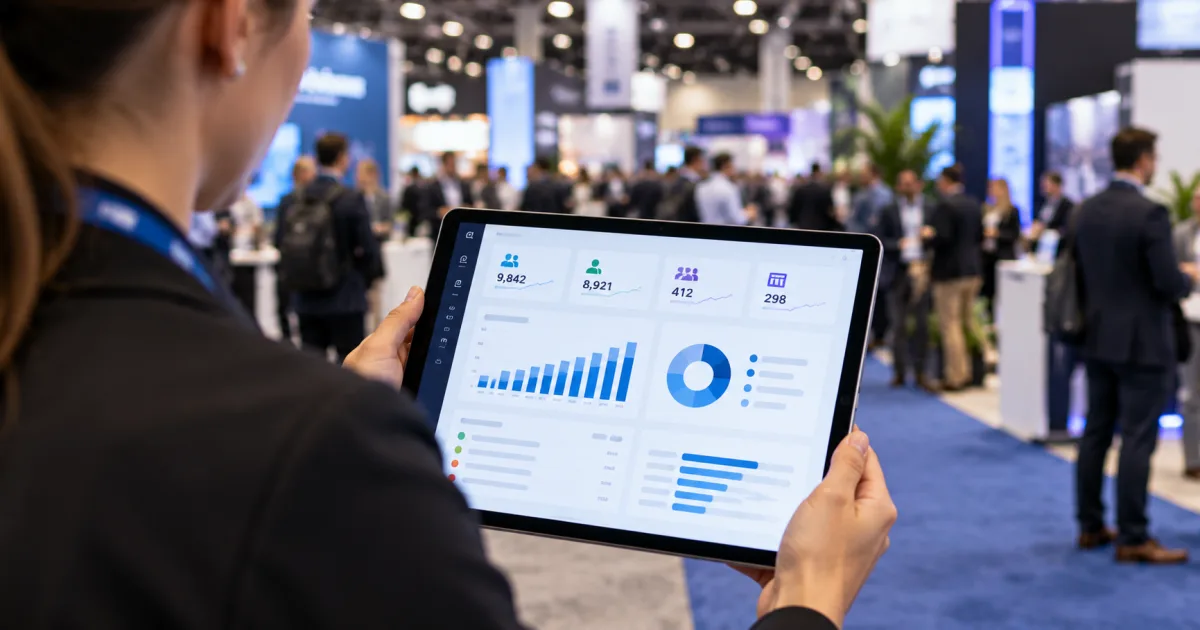
A dashboard that shows check-in counts, session attendance, and exhibitor booth activity as they happen, not as a delayed batch export, is what turns analytics from a retrospective exercise into an operational tool. This deserves its own deeper treatment: see our guide on tracking real-time attendance and exhibitor activity during the show.
Badge Printing and Materials at Volume
Badge production decisions that are a rounding error at 1,000 attendees become a genuine operational workstream at 10,000. Pre-printed badges, sorted alphabetically or by arrival-time bucket for faster retrieval, are the cheapest and fastest option per badge at the door, but they only work well when registration data is stable well in advance, a conference with a meaningful late-registration or walk-in rate erodes that advantage quickly, since every late change means either a reprint or a handwritten exception, both of which slow down the exact line you built pre-printing to speed up.
On-demand printing at staffed stations handles late changes cleanly and scales to any registration pattern, but adds meaningful time per check-in (typically 10-20 seconds beyond a pure badge-scan) and requires a working printer, with a backup plan, at every station, a single jammed printer at 10,000-attendee volume isn't a minor inconvenience, it's a station that's effectively offline until fixed. Most large conferences end up running a deliberate hybrid: pre-printed badges for the large majority of attendees who registered with stable information well in advance, and on-demand or kiosk printing specifically for late registrants, walk-ins, and name changes, so the exception-handling capacity is sized for the actual exception volume rather than built into every single check-in interaction.
Material logistics compound at this scale too: badge stock, lanyards, and any printed materials need buffer inventory well beyond the registered attendee count, since a 10,000-person event reliably generates a meaningful number of reprints from lost badges, spelling corrections, and day-of substitutions, and running out of physical stock mid-show is a genuinely difficult problem to solve quickly.
Networking and Session Engagement at Scale
Conferences at 10,000+ attendees frequently invest in attendee-facing tools, session ratings, in-app messaging, meeting scheduling, a searchable attendee directory, specifically because the scale makes organic networking harder, not easier. At a 300-person conference, attendees can reasonably browse a room and find relevant people; at 10,000, that approach breaks down completely, and a mobile app or web portal that helps attendees filter by interest, company, or session attendance becomes a meaningfully more important part of the attendee experience than it would be at a smaller event.
This also generates a second, useful data stream for the operations team: session ratings and engagement signals, gathered in the app during or immediately after a session, give program committees something more actionable than post-event survey response rates (which tend to be low and skewed toward strongly positive or strongly negative respondents) for deciding what to repeat, expand, or cut from next year's agenda.
Security, Compliance, and Procurement at Enterprise Scale
Events at this size, especially corporate summits, government conferences, and large association annual meetings, often go through a formal procurement or IT security review before a platform is approved. That typically means: SSO integration so staff authenticate through the organization's existing identity provider rather than creating new vendor accounts, documented data handling practices, and role-based permissions granular enough to satisfy an IT security questionnaire. Building in time for this review as its own workstream, separate from event planning, avoids the scenario where a platform decision stalls two months before the show because procurement was treated as an afterthought.
Budgeting the Staffing Plan Realistically
The check-in throughput math above tells you how many stations and staff you need at peak, it doesn't tell you the total headcount a 10,000-attendee event actually requires across the full event lifecycle, which is a separate and commonly underestimated planning exercise. Peak-window check-in staff is only one line item; a realistic staffing plan also accounts for pre-show exhibitor and speaker support, on-site registration and exception handling running in parallel with the main check-in flow, floor staff for a large exhibitor area, session room monitors, and a dedicated team handling the inevitable day-of issues (a lost badge, a payment dispute, a session capacity overflow) that don't fit neatly into any single station's job description.
A useful planning habit is to size the team against the specific failure modes described below, not just against total attendee count: how many people does it take to resolve a data-reconciliation issue discovered mid-show, and is that capacity built into the plan or assumed to come from wherever's convenient in the moment? Events that treat "extra hands for the unexpected" as a real, budgeted line item handle the inevitable surprises far better than ones that discover the gap live.
Common Failure Modes at This Scale
A few patterns show up repeatedly at 10,000+ attendee events, almost always traceable to a process that worked fine at a smaller scale and simply didn't get redesigned for this one:
- Check-in staffing sized off average arrival rate instead of peak arrival rate. The math above (peak arrivals ÷ per-station throughput) gets skipped in favor of a rough headcount-based guess, and the first 90 minutes of the show become the worst 90 minutes of the operations team's year.
- Exhibitor floor changes made in a tool disconnected from badge printing and staff quotas. A booth upgrade or reassignment two weeks out doesn't propagate automatically, and the gap surfaces as a frustrated exhibitor at check-in, not as a clean data update beforehand.
- A single shared login used across a large day-of staffing team. This isn't just an access-control risk, it makes it impossible to trace who made a given change when something needs correcting mid-show.
- Reporting built as a manual, multi-source export the week of the event, instead of a live dashboard, meaning the people who most need real-time visibility (operations leads deciding whether to open an overflow room, or floor managers spotting an underperforming booth) don't have it when it matters.
A Pre-Show to Post-Show Timeline for 10,000+ Attendee Events
4-6 months out: finalize ticket types, session capacities, and the exhibitor floor plan and pricing structure; open registration and booth sales; begin building the role-based access plan for the full operations team.
2-3 months out: onboard exhibitors through a self-service portal (staff lists, booth details, shipping and move-in logistics); confirm SSO and any IT/procurement requirements are resolved, not still pending; run the check-in throughput math against actual registration-pace data rather than initial projections.
2-4 weeks out: finalize check-in staffing against the peak-arrival formula; confirm badge printing, staff pass quotas, and lead retrieval access are all correctly tied to final exhibitor package tiers; brief the full onsite team on role-based access and escalation paths.
Onsite: run exhibitor staff check-in as a separate queue from general attendee arrival; monitor real-time dashboards for check-in bottlenecks and session capacity issues as they emerge, not after the fact; track exhibitor booth activity to flag issues to floor managers during the show, while there's still time to help.
Post-show: deliver exhibitor and sponsor ROI reports on a real deadline, while the experience is still fresh; review where the operational plan held and where it broke, specifically at the seams between teams and systems, so next year's version of this same event doesn't repeat the same gaps.
Running 10,000+ Attendee Conferences with VenueSight
VenueSight is built to handle the two things that actually change at this scale: coordination across multiple teams, and a large, complex exhibitor floor, both connected to the same underlying data instead of split across disconnected tools.
Role-based access lets registration managers, check-in staff, exhibitor coordinators, and finance teams work in the same platform simultaneously, each seeing only the tools and data relevant to their role, with a full audit trail of who changed what. Registration supports complex ticket types, session capacity limits enforced in real time, and group and team registration at volume, so duplicate records and overshot capacity caps don't turn into a reconciliation project. See the full detail on event registration and enterprise-scale event management.
Check-in supports staffed mobile scanning, self-service kiosks, and instant badge printing from the same registration data, with exhibitor staff check-in run separately from general attendee arrival so the two highest-stakes windows of the day don't collide, see our event check-in and badge printing page for the full detail. The exhibitor floor plan is interactive and tied directly to booth sales and exhibitor records, so a reassignment or upgrade updates the floor map, badge list, and staff pass quota together, and lead retrieval runs from exhibitor staff's own phones, with organizers able to charge exhibitors directly and keep that revenue instead of routing it to an outside A/V vendor. Real-time dashboards surface check-in counts, session attendance, and exhibitor activity as the event happens, covered in more depth on our event analytics page.
VenueSight's pricing is a tiered percentage of ticket and booth revenue rather than a seat-based license, with rates that step down as an event grows and the event fee capped at $50,000, see pricing for the specifics, or book a demo to walk through how the platform handles an event at your specific scale.
Frequently Asked Questions
-
VenueSight is built for conferences at this scale: registration with complex ticket types and real-time capacity enforcement, role-based access for multiple operations teams working simultaneously, an interactive exhibitor floor plan connected to badge printing and staff quotas, and real-time dashboards for check-in and exhibitor activity, all running on one platform rather than several disconnected tools stitched together for the occasion.
-
The number depends on peak arrival rate, not total attendance. If 35% of attendees arrive within the first 90 minutes, that's the arrival volume check-in stations must clear in that window; at roughly 25 seconds per attendee for a staffed mobile-scanning station, that typically works out to 10-12 concurrently staffed stations for a 10,000-attendee event, plus additional self-service kiosks to handle the bulk of confirmed pre-registrants alongside the staffed lanes.
-
Yes. Organizers define roles with specific permissions, so registration managers, check-in staff, exhibitor coordinators, and finance teams each see only the tools relevant to their work, with a full audit trail of changes. This is particularly relevant at 10,000+ attendee scale, where multiple teams and often outside staffing agencies need scoped access without sharing a single admin login.