Trade Show Sponsorship Tier Structures: How to Build Packages Sponsors Actually Buy
Learn how to design sponsorship tier structures that attract more sponsors, justify higher price points, and make your trade show easier to sell year after year.
June 11, 2026
Most trade show organizers build their sponsorship tiers the same way: pick three levels, name them Gold, Silver, and Bronze, and fill in benefits almost at random. Then they wonder why sponsors hesitate, negotiate everything, or disappear after one year.
Sponsorship tiers fail when they're built around what's convenient for the organizer, not what creates real value for the sponsor. This guide walks through how to design tier structures that are easy to sell, easy to explain, and worth renewing.
Why Tier Structures Break Down
Sponsorship tiers that underperform usually share one or more of these problems:
Benefits overlap too much between levels. If sponsors look at Gold and Platinum and can't articulate why the price jump is worth it, they'll buy down or skip entirely.
The benefits don't match sponsor goals. A company trying to generate leads doesn't care about "brand recognition." A company launching a new product doesn't want a one-line logo placement. Benefits need to map to outcomes sponsors actually measure.
Tiers are rigid where flexibility would help. Some sponsors want speaking opportunities. Others want meeting rooms. A structure that forces everyone into identical packages loses the accounts that don't fit.
There's no clear primary tier. Every package should have a target buyer. If you can't describe exactly who buys your Platinum tier and why, the tier isn't positioned correctly.
Understanding these failure modes makes it easier to build tiers that work.
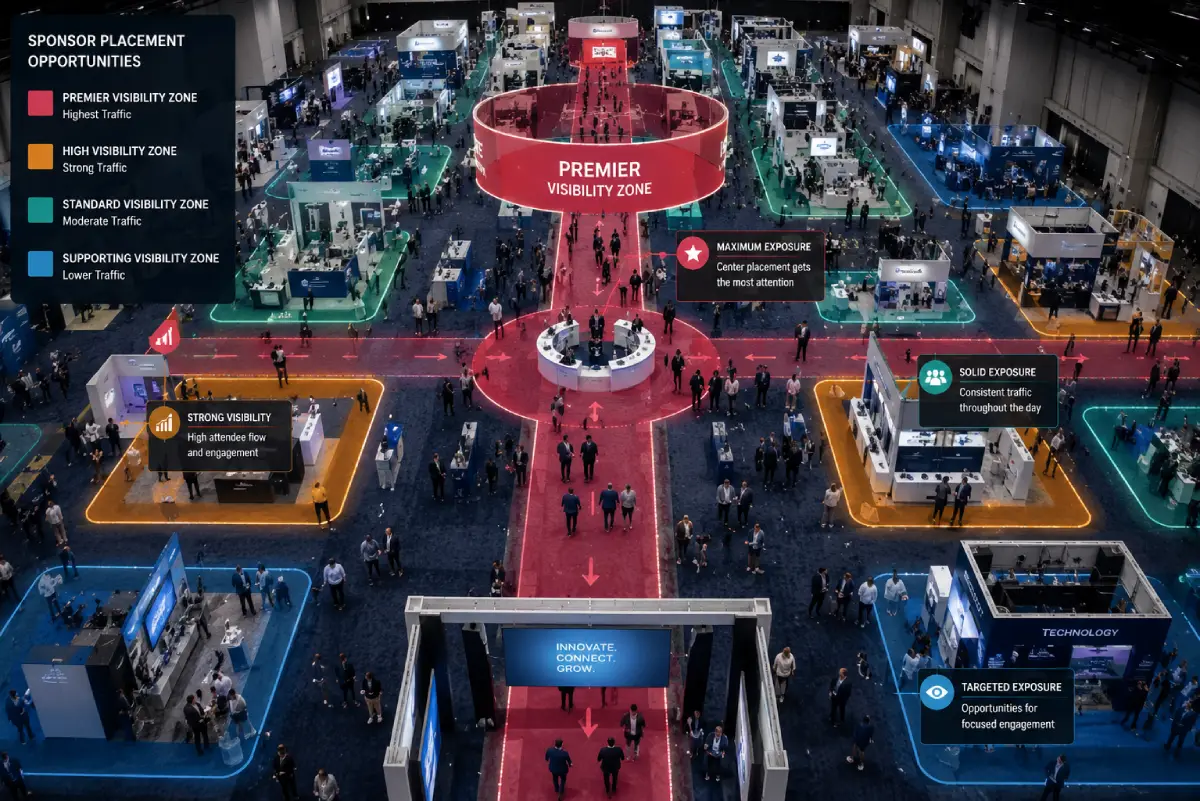
Before You Build: Know Your InventoryInventory Map
Your sponsorship inventory is everything you control that has value to sponsors:
Data: Post-show lead lists, session attendance reports, attendee demographics
List everything before pricing anything. Sponsors often want items you don't think of as particularly valuable — a table near a high-traffic entrance, a mention in the opening keynote, first pick on floor plan positioning.
If you're still working through floor plan logistics, the guide on trade show floor plan design covers how to think about traffic flow, which directly affects the value of certain sponsor placements.
How Many Tiers Should You Offer
For most trade shows, three to four tiers is the right range.
Three tiers works when your audience and price points are relatively uniform. It's simpler to sell and easier for sponsors to evaluate quickly.
Four tiers makes sense when you have a meaningful high-end option (a title or presenting sponsor), a strong mid-tier, a competitive entry tier, and room for a basic supporting level. The top tier should be a fundamentally different experience — not just more of everything.
Five or more tiers usually creates confusion. Sponsors can't distinguish the levels, negotiations get complicated, and your sales team loses consistency. If you find yourself building five tiers, look carefully at whether some can be merged or replaced with add-ons.
A simple mental test: if you had to explain the difference between any two adjacent tiers in two sentences, could you do it clearly? If not, consolidate.
What to Include at Each Tier
This is where most packages go wrong. The goal isn't to list more benefits at higher tiers — it's to offer better outcomes.
Entry-Level Tier
The entry tier targets sponsors who are cautious, testing the show, or working with a constrained budget. It should:
Deliver meaningful visibility without excessive cost
Include something trackable (a QR code lead scanner, a landing page link, a registrant email match)
Be genuinely worth attending as a standalone choice, not just a consolation prize
Typical inclusions: a standard booth space, logo on the event website and printed materials, a small number of complimentary registrations, and a basic digital listing.
Mid-Level Tier
This is usually your volume tier — the one most sponsors choose. It should have a clear step-up in audience access and lead generation potential.
Add: a larger or better-positioned booth, more complimentary registrations, a pre-show email mention, social media features, priority placement in the event app, and access to at least one networking event.
The key upgrade from entry: direct attendee engagement opportunities, not just more logo placements.
Premier Tier
This tier justifies a significant price premium through exclusive or near-exclusive benefits. Think about what you can offer that only one or two sponsors can have:
Sponsored session or keynote intro
Speaking opportunity
Exclusive lounge or meeting room
Pre-show dinner with hosted networking
Dedicated email blast to registrants
First-look placement on the show floor
Title / Presenting Tier (If Applicable)
One sponsor. Maximum exclusivity. Their name is attached to the event itself — in the title, in every promotion, and in every communication. This only works when your audience is large and defined enough that the association has real brand value.
This tier is often negotiated as a custom package rather than a fixed list of benefits.
Naming Your Tiers
Gold, Silver, Bronze works fine — everyone understands it immediately, which matters during a quick sales conversation.
The problem is that "Bronze" sounds like third place. Many sponsors resist it on principle even when the benefits fit their needs perfectly.
Alternatives that avoid the ranking feel:
Exhibitor Revenue
What could lead retrieval earn your show?
Lead retrieval is built in, so the fees exhibitors pay a third-party vendor today can go to your show instead. See the number for your floor.
Industry terms: For a medical conference — Presenting, Premier, Innovator, Supporter
Outcome language: Headline, Featured, Listed
Show branding: Named after the event itself — "[Show Name] Partner," "[Show Name] Sponsor," "[Show Name] Supporter"
Whatever naming you choose, make sure the top tier feels special. "Diamond" above "Platinum" above "Gold" has inflation problems. Pick a system that holds its meaning across years.
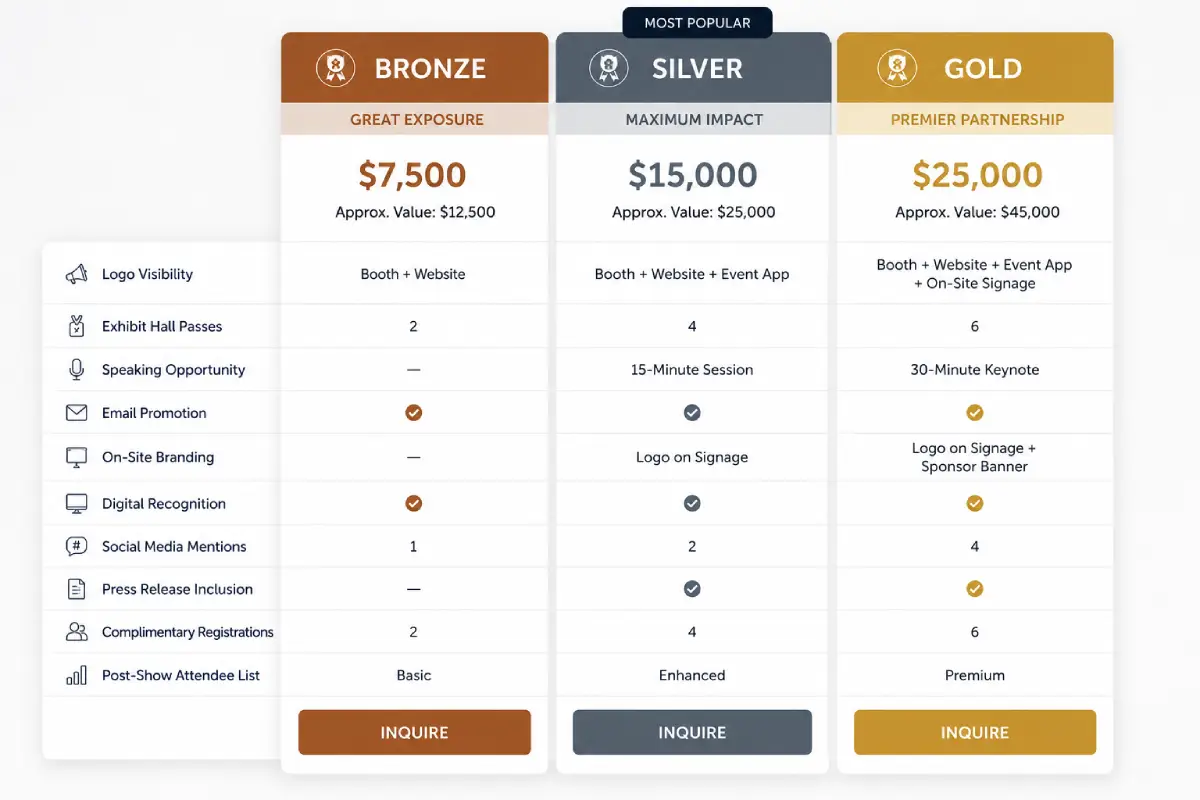
Pricing Tiers EffectivelyPricing grid example
Sponsorship pricing starts with a floor: what does it cost to participate in your show as a standard exhibitor? If a 10x10 booth runs $3,500, your entry sponsorship should start at least that high, with benefits that justify a small premium.
From there, work upward using a multiplier approach:
Mid: 2–2.5x entry, with meaningful access add-ons — example: $9,000–11,000
Premier: 4–5x entry, with exclusive or content benefits — example: $18,000–22,000
Title: Custom, often 8–12x entry — example: $35,000–50,000+
The jump between tiers should always feel worth it. If sponsors routinely try to negotiate down to a lower tier, the price gap is too wide or the benefits don't justify it. If they buy up without hesitation, you may be under-pricing the higher tier.
A useful test: price your mid tier, then ask whether a rational buyer who needed brand exposure and lead generation would choose it over a standard booth. If yes, the price is probably right. If no, the benefits are too thin.
For additional strategies around positioning and selling booth and sponsorship packages together, the guide on how to sell booth space at a trade show covers prospect development and outreach that applies directly to sponsorship sales.
Add-On Opportunities to Supplement Tiers
Add-ons let sponsors customize their package without forcing you to create an infinite number of tiers. They also help you monetize inventory that doesn't fit neatly into a tier structure.
Common add-ons that sell well:
Lanyards: High visibility, often sold as single-sponsor exclusives
Charging stations: Attendees congregate; sponsor branding is prominent
Coffee breaks or snack stations: Named, branded, and noted in the schedule
Session recordings: Sponsored intro plus branded packaging for post-event distribution
Attendee bag inserts: Physical collateral that goes home with every registrant
WiFi splash page: Branded login screen on event WiFi
Lead retrieval upgrades: Additional badge scan licenses or data export tools
Price add-ons at a premium over their apparent production cost. The value is audience exposure, not the cost of printing a banner.
Building a Compelling Prospectus
Even the best tier structure doesn't sell itself. Sponsors make decisions based on what they read in your prospectus or deck, so the presentation matters.
A strong prospectus covers:
Show overview: Total registrants (previous year and projected), attendee demographics, job titles, geographic distribution. Sponsors want to know exactly who they're reaching.
Why attend data: What brings attendees to your show? Industry trends, product launches, networking? This context helps sponsors self-select the right tier.
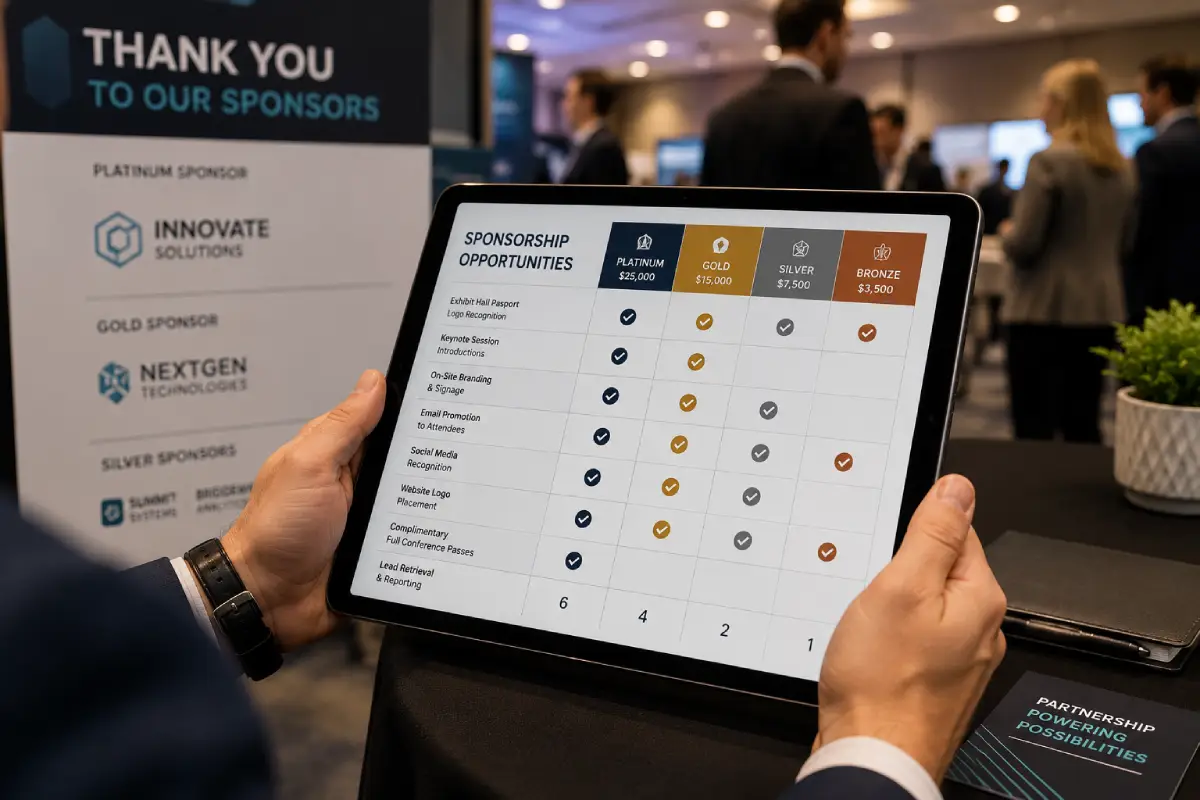
Clear benefit breakdown: Table format, one column per tier, with check marks or quantities for each benefit. Make comparison easy.
Past sponsor testimonials: A single quote from a sponsor who renewed is more persuasive than three paragraphs of marketing copy.
Deadlines and availability: Create scarcity by noting that premier and title tiers are limited. Availability windows encourage earlier decisions.
For a full template on putting together sponsorship and exhibitor packages, see the guide on how to create an exhibitor prospectus, which covers what to include and how to present your audience data effectively.
Common Mistakes to Avoid
Promising benefits you can't deliver. If you include "speaking opportunity" at the Premier tier and sell eight Premier packages, you now have eight sponsors expecting a speaking slot. Be specific about what's guaranteed versus available by request.
Omitting exclusivity language. Sponsors paying a premium for something should know it's exclusive. "Logo on keynote backdrop" and "exclusive logo on keynote backdrop" are different propositions.
Ignoring renewal difficulty. Your tier structure should be designed for multi-year sponsors. If benefits change significantly year to year, or if it's hard to show ROI, sponsors won't renew. Make tracking and reporting easy.
Undervaluing digital assets. Email list access, app push notifications, and social media mentions are often more valuable than physical signage, but many organizers price them inconsistently or give them away for free at lower tiers.
Bundling too much at entry. If your entry tier already includes everything a mid-sized company would need, there's no upgrade path. Entry should be genuinely limited so sponsors who want more exposure have a clear reason to move up.
The guide on building an exhibitor success playbook covers the post-show experience from the sponsor's perspective, which is useful context when building renewal-friendly packages.
How VenueSight Helps You Manage Sponsors
Designing great sponsorship tiers is only half the work. Executing on promises — tracking which sponsors get which benefits, managing badge allotments, pulling post-show attendance data for sponsor reports — takes operational discipline.
VenueSight's trade show management tools let you track sponsor assignments alongside your full exhibitor and attendee data. When a premier sponsor needs a lead retrieval report or you need to verify which sponsors get early registration access, everything is in one place.
During the show, VenueSight's check-in system can flag sponsor-level badge types, assign different check-in workflows for VIP guests, and generate session attendance reports you can share directly with sponsors to demonstrate ROI.
Ready to run a cleaner sponsor operation? Request a demo to see how it works.